Have you ever seen someone write “DNI” in a social media bio, comment, or text message and wondered what those three letters mean? This abbreviation is common on TikTok, Instagram, Tumblr, Discord, and X (formerly Twitter). However, its meaning can change depending on the conversation.
Understanding the context helps you know whether someone is setting a personal boundary, sharing a warning, or referring to something completely different.
Quick Answer: What Does DNI Mean in Text?
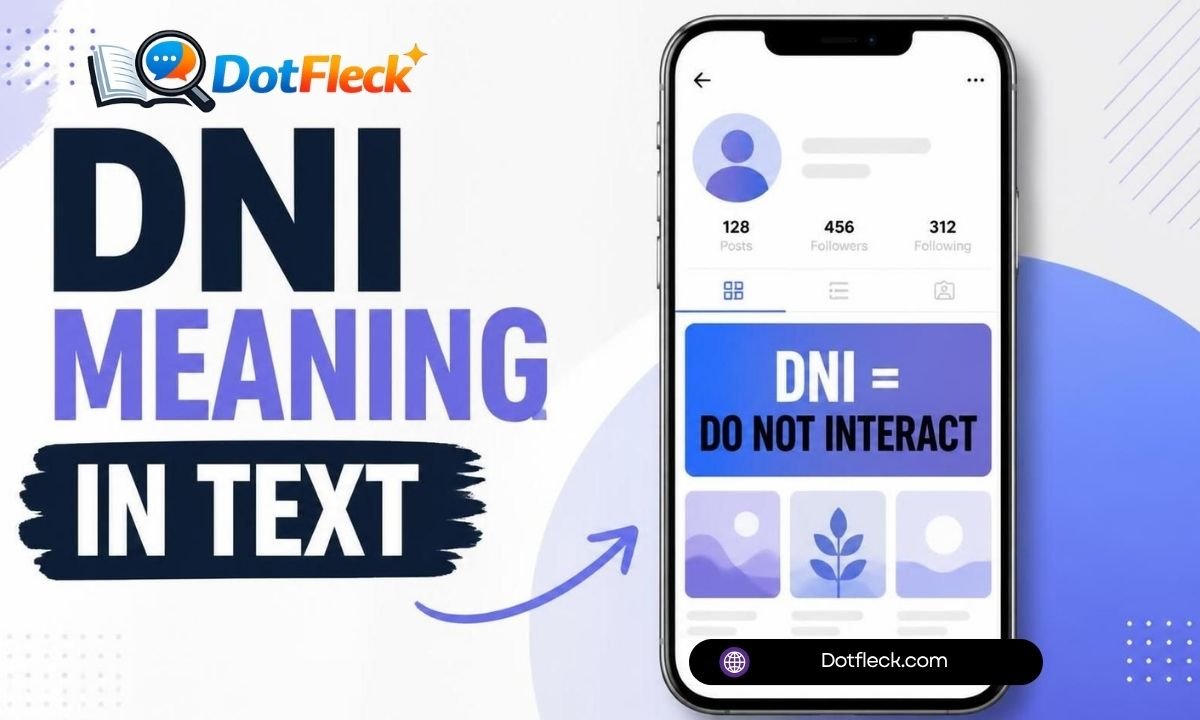
DNI stands for “Do Not Interact.” It is an internet abbreviation people use to tell specific individuals or groups not to engage with them or their online content. You may see it in social media bios, posts, comments, and messages. For example, “Minors DNI” means people under the specified age should not interact with that account or content.
What Does DNI Mean in Text?
In texting and internet slang, DNI means “Do Not Interact.” It is a short way of telling someone not to contact, follow, message, comment on, or engage with a particular account or post.
People commonly use DNI to establish boundaries and communicate who is not welcome in their online spaces.
For example:
- “DNI if you’re under 18.”
- “My profile is for adults only. Minors DNI.”
- “DNI if you support bullying.”
- “Please read my DNI list before following.”
In these examples, DNI identifies people who should avoid interacting with the account owner or their content.
Unlike casual texting abbreviations such as LOL (Laughing Out Loud) or BRB (Be Right Back), DNI communicates a specific request. It is generally more serious because it expresses a person’s preferences and boundaries.
What Does DNI Stand for on Social Media?
On social media, DNI stands for “Do Not Interact.” Users add it to their profiles, captions, pinned posts, and community guidelines to explain which people should avoid engaging with them.
The abbreviation appears across several platforms.
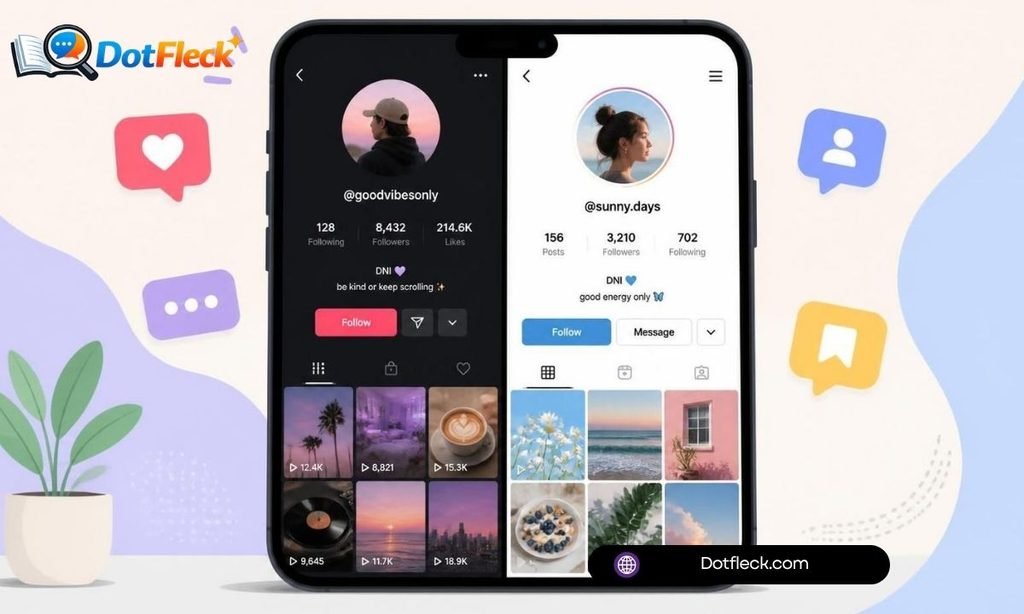
DNI Meaning on TikTok
On TikTok, DNI usually tells particular groups of users not to engage with someone’s videos, profile, or comments.
For example:
- “Minors DNI” means people under 18 should not interact.
- “DNI if you spread hate” means people who engage in hateful behavior should stay away.
- “DNI if you support bullying” means the creator does not welcome people who support bullying.
TikTok users may place this abbreviation in their bios, video descriptions, or pinned comments. It can help creators communicate their expectations before someone follows or contacts them.
DNI Meaning on Instagram
On Instagram, DNI commonly appears in profile bios and account descriptions. It tells visitors which people should not follow, message, comment on, or engage with the account.
For example:
“Artist account | DNI if you steal artwork.”
This means the account owner does not want people who steal artwork interacting with their profile.
DNI Meaning on Discord
On Discord, users may include DNI rules in their profiles, server introductions, or community guidelines.
For example:
“Welcome! DNI if you harass other members.”
This tells people who engage in harassment not to participate in that community or interact with the user.
DNI Meaning on Tumblr and X
On Tumblr and X (formerly Twitter), DNI is often associated with fandoms, personal blogs, online discussions, and creative communities.
Users may publish a longer DNI list explaining which people, behaviors, or viewpoints they do not want associated with their accounts.
Why Do People Use DNI?
People use DNI to communicate personal boundaries and manage their online interactions. It helps others understand who is welcome in a particular digital space.
Here are some common reasons:
1. Setting personal boundaries: Someone may not want certain people contacting them or commenting on their posts.
2. Protecting younger audiences: An account that shares mature themes may use age-related DNI warnings to discourage minors from engaging with its content.
3. Avoiding unwanted conversations: Users may want to avoid arguments, harassment, or uncomfortable discussions.
4. Creating safer online communities: Community members can use DNI rules to explain which behaviors are unacceptable.
5. Managing followers: Artists, bloggers, and creators may use DNI lists to communicate their preferences before accepting followers or messages.
DNI is not necessarily an insult or an expression of anger. Sometimes, it is simply a direct way to communicate personal expectations.
What Does DNI Mean in a Bio?
When someone writes DNI in their social media bio, they are identifying people or groups they do not want interacting with their account.
The abbreviation usually appears with additional information explaining the restriction.
For example:
| Bio example | Meaning |
| Minors DNI | People under the stated age should not interact. |
| DNI if racist | People with racist views are not welcome. |
| DNI if you support bullying | People who support bullying should stay away. |
| DNI if you steal art | Art thieves should not engage with the account. |
| DNI if you harass creators | People who harass creators are not welcome. |
A DNI list can contain one restriction or several. Some users keep a short statement in their bio and explain the full list in a pinned post or profile link.
If you see this abbreviation in someone’s bio, read the complete statement before following or messaging them.
What Is a DNI List?
A DNI list is a collection of rules or criteria identifying people whom an account owner does not want interacting with them.
These lists are particularly common in fandom, art, blogging, and other online communities.

A typical DNI list might look like this:
My DNI List:
- People who harass others.
- People who steal artwork.
- People who send unwanted messages.
- People who disrespect personal boundaries.
- People who engage in hateful behavior.
The exact restrictions depend on the account owner’s preferences. There is no universal DNI list that every social media user follows.
Some lists are short and straightforward, while others explain specific behaviors, age limits, or community expectations.
DNI Meaning in Different Contexts
Although “Do Not Interact” is the most common meaning in internet slang, DNI can have other definitions outside social media.
Understanding the surrounding conversation helps you identify the correct meaning.
| Context | DNI meaning | Explanation |
| Texting and slang | Do Not Interact | A request to avoid engaging with someone. |
| TikTok and Instagram | Do Not Interact | A boundary written in a bio or post. |
| Online communities | Do Not Interact | A list of people who should avoid participation. |
| Medicine | Do Not Intubate | An instruction concerning the use of an endotracheal breathing tube. |
| U.S. government | Director of National Intelligence | The official who leads the U.S. Intelligence Community. |
| Spanish identification | Documento Nacional de Identidad | A national identity document. |
The social media meaning is generally the most relevant when you encounter DNI in a casual online conversation.
DNI Meaning in Medical Terms
In healthcare, DNI can stand for “Do Not Intubate.”
It refers to a medical instruction that a patient does not want an endotracheal breathing tube inserted under specified circumstances.
DNI and DNR are related but different medical terms. A DNR order concerns cardiopulmonary resuscitation (CPR), while a DNI order concerns intubation.
These instructions should not be confused with the internet slang meaning of DNI.
DNI Meaning in the U.S. Government
In American government and national security discussions, DNI stands for “Director of National Intelligence.”
The Director of National Intelligence leads the U.S. Intelligence Community and serves as the President’s principal intelligence adviser.
This meaning is common in government reports, political discussions, and news coverage rather than casual text messages.
DNI Meaning in Spanish
DNI can also stand for “Documento Nacional de Identidad,” which translates to National Identity Document.
It refers to an official identity card used in Spain and other Spanish-speaking countries, although the document’s specific system and rules vary by country.
For example, someone discussing travel documents or identification requirements in Spain may use DNI in this sense.
10 Examples of DNI Used in Text Conversations
The easiest way to understand internet slang is to see how people use it in everyday situations.
Here are 10 practical examples of DNI in online conversations.
| Conversation | Meaning |
| Alex: “Why can’t I follow your account?” Mia: “My bio says minors DNI.” | The account does not welcome underage users. |
| Sam: “Can I join your art community?” Lily: “Check the DNI list first.” | Sam should review the community’s restrictions. |
| Jake: “I sent you a message.” Emma: “Sorry, your account is on my DNI list.” | Emma does not want Jake interacting with her. |
| Mia: “Who can comment on this post?” Alex: “Everyone except the groups listed under DNI.” | Certain groups are excluded from interaction. |
| Ben: “I love your artwork!” Kate: “Thanks! Please don’t steal it. Art thieves DNI.” | The artist does not welcome people who steal artwork. |
| Ryan: “Can I join your Discord?” Amy: “Read the server rules. Harassers DNI.” | People who harass others should not join. |
| Tom: “Why did you write DNI in your bio?” Ella: “I want to avoid unwanted interactions.” | Ella uses DNI to set boundaries. |
| Chris: “Can I follow your fan page?” Zoe: “Sure, just check my DNI list.” | Zoe wants visitors to review her restrictions. |
| Lily: “I noticed your post says DNI.” Mark: “Yes, it’s a reminder about my boundaries.” | The post communicates personal expectations. |
| Noah: “Should I message that creator?” Ava: “Read their bio first. It says DNI for certain users.” | Noah should check whether the restriction applies to him. |
These examples show that DNI is usually a boundary-setting expression rather than a regular conversational response.
How to Use DNI Correctly in Text Messages
If you want to use DNI in a message or social media profile, make sure your meaning is clear.
Here are some helpful tips:
- Explain who the restriction applies to: Instead of writing only DNI, specify the group or behavior you are referring to.
- Keep your message simple: Short statements are easier for visitors to understand.
- Use it in the right context: DNI works best in bios, profile descriptions, community rules, and online posts.
- Avoid unnecessary confusion: If your audience may not understand the abbreviation, write “Do Not Interact” in full.
- Respect other people’s boundaries: If someone has listed you in their DNI criteria, avoid contacting or engaging with them.
For example, “DNI if you send unwanted promotional messages” is more informative than simply writing “DNI.”
Is DNI Rude or Disrespectful?
No, DNI is not automatically rude. It is generally a direct expression of someone’s personal boundaries.
However, its tone depends on how the person writes the surrounding message.
For example:
- “DNI if you harass people” sounds like a clear community rule.
- “Everyone I dislike, DNI” may sound dismissive or unfriendly.
- “Minors DNI” communicates an age-related restriction.
Some people may find DNI lists too strict, while others appreciate knowing an account’s expectations before interacting.
The important thing is to understand that DNI communicates a request, not necessarily hostility.
DNI vs. DNF vs. BYF vs. DND
DNI is sometimes confused with other internet abbreviations because they appear in similar social media environments.

However, each expression has a different purpose.
| Abbreviation | Full form | Meaning |
| DNI | Do Not Interact | Tells certain people not to engage. |
| DNF | Do Not Follow | Tells certain users not to follow an account. |
| BYF | Before You Follow | Provides information users should read before following. |
| DND | Do Not Disturb | Indicates that someone does not want interruptions. |
| MDNI | Minors Do Not Interact | Tells minors not to engage with an account or content. |
DNI vs. DNF
DNI means “Do Not Interact,” while DNF means “Do Not Follow.”
DNI can cover comments, messages, follows, and other engagement. DNF specifically asks certain people not to follow the account.
DNI vs. BYF
BYF means “Before You Follow.” It introduces information about an account that visitors should understand before following.
DNI, on the other hand, identifies people who should not interact with the account.
DNI vs. DND
DND means “Do Not Disturb.” It generally communicates that someone does not want to be interrupted.
DNI specifically asks certain people not to engage with an account or its content.
DNI vs. MDNI
MDNI means “Minors Do Not Interact.” It is a more specific version of DNI that identifies minors as the group being asked not to interact.
The exact age restriction should be checked in the account’s wording rather than assumed in every situation.
Does DNI Actually Stop Someone From Interacting?
No. Writing DNI in a profile does not automatically prevent people from following, commenting, or sending messages.
It is a written request that depends on other users respecting the account owner’s boundaries.
If someone wants to restrict another account technically, they may need to use platform features such as:
- Blocking an account.
- Restricting unwanted users.
- Limiting comments.
- Controlling who can send direct messages.
- Making an account private.
The availability of these features depends on the platform.
Remember: DNI communicates who should stay away, while blocking and privacy settings provide technical controls over account interactions.
Common Misunderstandings About DNI
People sometimes misunderstand DNI because its meaning depends on where it appears.
Here are a few common mistakes:
- Thinking DNI means Do Not Follow: DNI is broader because it can include messages, comments, and other interactions.
- Assuming it is always an insult: Most of the time, it communicates a boundary or preference.
- Thinking it automatically blocks someone: DNI does not activate blocking or privacy settings.
- Assuming it has only one definition: It can refer to different things in medical, government, and international contexts.
- Ignoring the words around it: The additional text usually explains exactly who should avoid interacting.
Always consider the platform and surrounding conversation before deciding what DNI means.
When and Where Should You Use DNI?
DNI is most appropriate when you want to communicate interaction preferences in an online space.
You can use it in:
- Social media profile descriptions.
- TikTok video captions.
- Instagram bios.
- Discord community guidelines.
- Tumblr blog descriptions.
- Pinned posts and online announcements.
For professional emails, business conversations, or formal communication, writing “Please do not contact me” or “I prefer not to engage” is usually clearer.
If you use DNI in a public profile, explain your restrictions so visitors understand what you mean.
Frequently Asked Questions About DNI
1. What does DNI mean in texting?
DNI means “Do Not Interact” in texting and internet slang. It tells certain people not to contact, follow, message, or engage with someone or their content.
2. What does DNI mean on TikTok?
On TikTok, DNI stands for “Do Not Interact.” Creators use it in bios, captions, and comments to identify people who should avoid engaging with their accounts or videos.
3. What does DNI mean on Instagram?
DNI on Instagram means “Do Not Interact.” People usually add it to their bios to explain which users or groups they do not want following, messaging, or commenting on their accounts.
4. What does DNI mean in someone’s bio?
When someone includes DNI in their bio, they are setting boundaries about who can interact with their account. The abbreviation is often followed by specific groups, behaviors, or restrictions.
5. Is DNI the same as blocking?
No. DNI is a written request asking certain people not to interact, while blocking is a technical feature that restricts an account’s ability to contact or engage with another account.
6. What does MDNI mean?
MDNI stands for “Minors Do Not Interact.” It is used to tell underage users not to engage with a particular account or its content.
7. Is DNI slang or an acronym?
DNI is an internet abbreviation commonly grouped with online slang. More precisely, it is an initialism because people generally pronounce its letters individually: D-N-I.
8. Can DNI have meanings other than Do Not Interact?
Yes. DNI can also mean “Do Not Intubate” in healthcare and “Director of National Intelligence” in the United States government. In Spain, it can refer to a national identity document.
Conclusion
Understanding DNI meaning in text is simple once you know the context. In most social media conversations, DNI stands for “Do Not Interact.” People use it to establish boundaries and explain which individuals or groups should avoid engaging with their accounts or content.
You will commonly find it on TikTok, Instagram, Discord, Tumblr, and X. Remember that DNI is a request rather than an automatic blocking feature. If you encounter it in someone’s bio or post, read the surrounding information to understand exactly what they mean.

Ethan Whitmore is an English language writer who enjoys making grammar, word meanings, and modern slang simple and easy to understand. His content focuses on clear explanations, practical examples, and everyday English usage.