
You’ve typed it, deleted it, and typed it again: is it “Smooth vs. Smoothe”? The extra “e” looks so natural that plenty of confident writers add it without a second thought. Here’s the direct answer: “smooth” is the only correct spelling.
“Smoothe” is a common misspelling, not an accepted variant. Once you see why the mistake happens, you’ll never second-guess it again.
Smooth vs. Smoothe What’s the Difference?
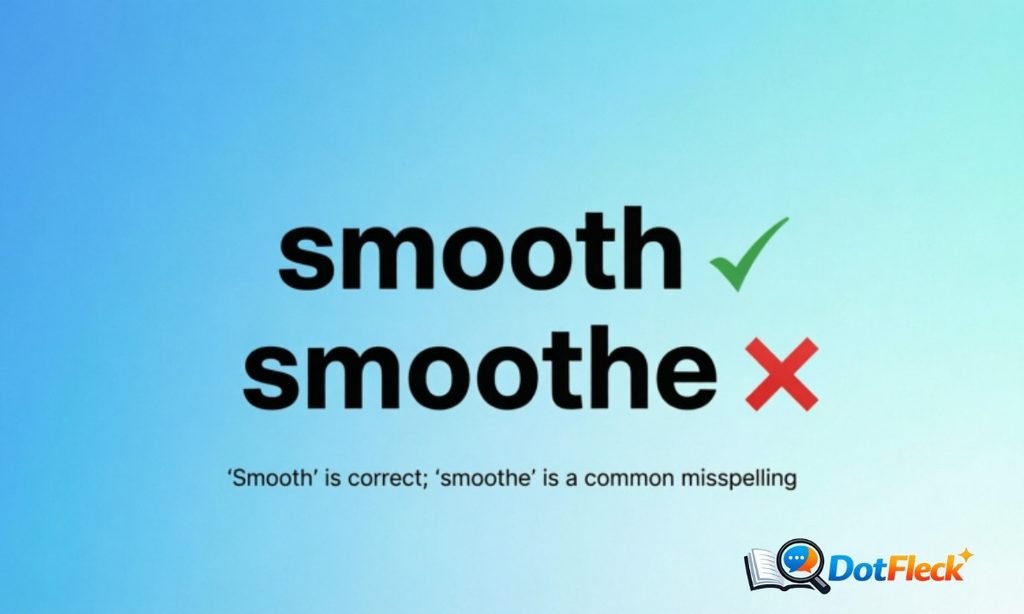
There isn’t really a difference in meaning, because “smoothe” isn’t a standard English word at all. “Smooth” covers every use case adjective, verb, present tense, and past tense (smoothed). “Smoothe” simply doesn’t appear in Merriam-Webster, Oxford, or any major dictionary as a standard entry.
So when someone asks which one is correct, the honest answer is that there’s only one real option. “Smoothe” is a spelling slip, not a stylistic choice.
Read Also : 👉 Cannot vs Can Not
Why Writers Think “Smoothe” Might Be Correct
If “smoothe” is wrong, why does it show up so often, even in published writing? The answer comes down to how English trains our brains to expect certain letter patterns.
Pattern Confusion in English “Smooth vs. Smoothe”
English is full of words that end in a silent “e” after two vowels or a “th” sound soothe, breathe, bathe, loathe. Your brain sees “smooth” sitting right next to these words in shape and sound, and it quietly suggests, “this one probably needs an e too.” It doesn’t. “Smooth” simply never picked up that silent “e” in its spelling history, even though it rhymes with words that did.
Influence of Informal Writing “Smooth vs. Smoothe”
Once a misspelling appears enough times online in comments, product names, or social captions it starts to look normal. Readers see “smoothe” repeated in ads or casual posts and assume it must be an accepted variant. Repetition creates familiarity, but familiarity isn’t the same as correctness.
Visual Guessing “Smooth vs. Smoothe”
Some writers simply guess based on how a word “feels” when they type it. Because “smooth” already ends in a vowel-heavy cluster, adding an “e” feels like it completes the word visually. It’s a small, understandable slip, but it’s still a slip.
Smooth as an Adjective
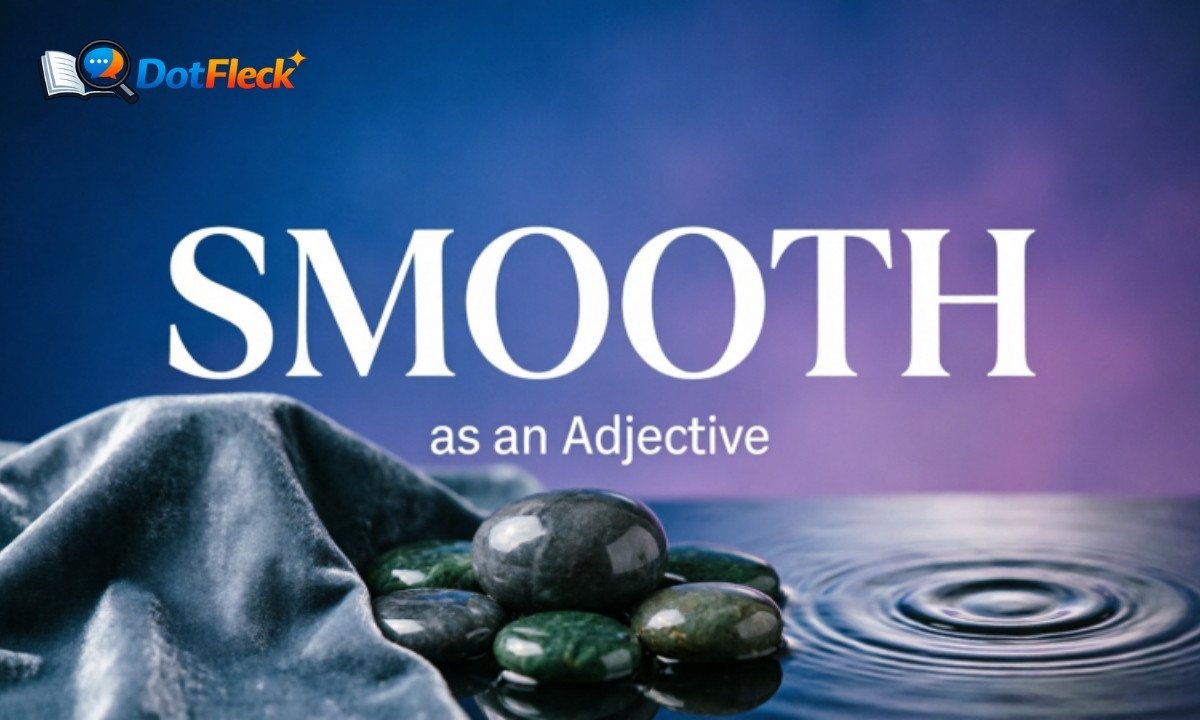
As an adjective, smooth describes something free of bumps, roughness, or sudden change. It’s one of the most flexible descriptive words in English, and it stretches across several related meanings.
Smooth as Physical Texture
This is the most literal use: describing a surface with no bumps or rough spots.
Correct: “The countertop felt smooth under her hand.” Incorrect: “The countertop felt smoothe under her hand.”
Smooth as Effortless Movement
Smooth also describes motion or transitions that happen without friction or interruption.
Correct: “The plane made a smooth landing.” Incorrect: “The plane made a smoothe landing.”
Smooth as Refined or Polished
In this sense, smooth describes something well-executed or free of rough edges in quality.
Correct: “The presentation had a smooth flow from start to finish.”
Smooth as Social Charm
Smooth can also describe a person’s manner, confident, persuasive, and easygoing, sometimes with a hint of slickness.
Correct: “He’s known for his smooth way of handling difficult clients.”
Summary of Adjective Uses
Whether you’re describing a surface, a landing, a presentation, or a personality, the spelling never changes. It’s always smooth, regardless of which shade of meaning you intend.
Don’t Miss : Historic vs Historical
Smooth as a Verb
Smooth also works as a verb, meaning to make something flat, even, or free of trouble. This is where the “smoothe” mistake shows up most often, since writers assume the verb form needs the extra letter.
Physical Actions
Correct: “She smoothed the tablecloth before guests arrived.” Incorrect: “She smoothed the tablecloth before guests arrived” written as “smoothed”there’s no version of this verb that takes an extra “e.”
How to spell smooth
There’s only one spelling to remember: s-m-o-o-t-h, with no “e” at the end in any form. The verb keeps this same base spelling and simply adds standard endings like -ed, -ing, or -s.
Emotional or Social Situations
Smooth also works figuratively, meaning to ease tension or resolve a problem.
Correct: “They met privately to smooth over the disagreement.” Incorrect: “They met privately to smoothe over the disagreement.”
Verb Conjugation of “Smooth”
Here’s how the verb behaves across tenses:
- Base form: smooth (“I smooth the dough by hand.”)
- Present tense (third person): smooths (“She smooths the sheets every morning.”)
- Past tense: smoothed (“He smoothed the wrinkles out of his shirt.”)
- Present participle: smoothing (“They’re smoothing the road surface today.”)
Notice that none of these forms ever add an “e” before the ending. The “e” some writers add to “smoothe” has no grammatical role to play.
Is “Smoothe” Ever a Real Word?
Not in standard American or British English. You won’t find “smoothe” as a headword in Merriam-Webster, Oxford, or Cambridge dictionaries. It occasionally appears in brand names, stylized product labels, or older texts, but that doesn’t make it correct in everyday writing. Treat it the same way you’d treat any other misspelling: avoid it in emails, essays, and professional content.
Smooth vs. Smoothen vs. Smoothe
This trio causes extra confusion because “smoothen” actually does exist, unlike “smoothe.”
| Term | Correct? | Meaning | Typical Use | Example |
| Smooth | Yes | Even, free of roughness; to make even | Standard everyday use | “Smooth the wrinkles from the fabric.” |
| Smoothen | Yes, but uncommon | To make smooth | Occasionally in technical or regional writing | “Repairs will smoothen the road surface.” |
| Smoothe | No | Not a standard word | Misspelling of “smooth” | Should always be corrected to “smooth” |
When “Smoothen” Appears
“Smoothen” shows up in some dictionaries and occasionally in news writing or regional English, especially outside the US. It means the same thing as the verb “smooth,” but most American style guides and editors prefer the simpler, more common “smooth” instead. Unless you’re quoting a source that used “smoothen,” stick with “smooth” for cleaner, more natural writing.
Smooth vs. Sleek
“Smooth” and “sleek” overlap but aren’t identical. Smooth focuses on the absence of bumps or friction, while sleek adds a sense of style, shine, or streamlined design.
Example: “The car’s smooth ride impressed everyone” focuses on comfort, while “the car’s sleek design impressed everyone” focuses on appearance.
Smooth vs. Polished
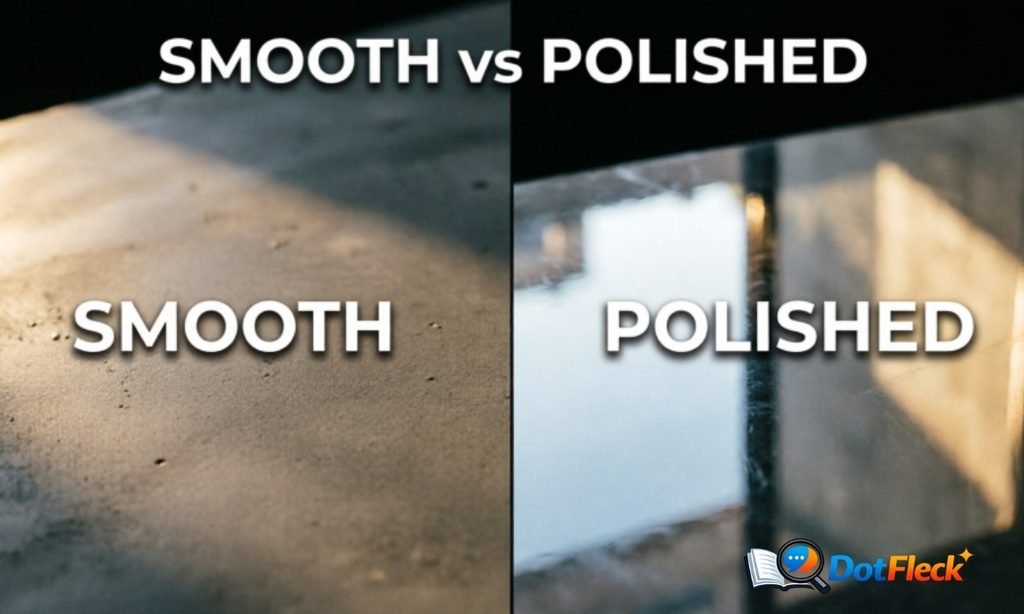
Polished implies effort was put into refining something, while smooth simply describes the resulting quality. A presentation can be smooth without anyone noticing the work behind it, but calling it polished draws attention to the preparation itself.
Common Idioms Using “Smooth”
English uses “smooth” in several fixed expressions, and the spelling rule doesn’t change in any of them.
Smooth Sailing
Meaning an easy process with no problems: “Once the paperwork was filed, it was smooth sailing from there.”
Smooth Things Over
Meaning to calm a tense situation or resolve a conflict: “He tried to smooth things over after the argument.”
Smooth Talker
A person who speaks persuasively, sometimes in a way that seems insincere: “Don’t trust him he’s a smooth talker.”
Smooth Operator
Someone who handles situations, especially social or business ones, with confidence and ease: “She’s a smooth operator when it comes to negotiations.”
Smooth E Cream
“Smooth E” is a skincare brand name, not a grammar rule. Brand names often bend spelling for style or trademark purposes, and “Smooth E” is simply a product title, unrelated to how the word “smooth” should be spelled in regular writing.
Don’t let brand names influence how you spell the word elsewhere.
Common Mistakes and Corrections “Smooth vs. Smoothe”
Here are the slip-ups that show up most often, along with quick fixes:
- Mistake: “The lotion left my skin feeling smoothe.” Fix: “smooth.”
- Mistake: “He smoothes the wood before painting” spelled with the extra “e” in the base verb. Fix: the verb is “smooths,” never “smoothes.”
- Mistake: Assuming “smoothen” and “smoothe” are interchangeable. Fix: “smoothen” is a rare but real word; “smoothe” is not a word at all.
A simple way to remember: if you’re tempted to write “smoothe,” picture the extra “e” as an actual error sitting inside the word, a small warning sign that something’s off.
Case Study: Why Small Spelling Errors Matter
Imagine two versions of the same product description. One reads, “This serum leaves skin feeling smooth and refreshed.” The other reads, “This serum leaves skin feeling smoothe and refreshed.” The first sounds professional and trustworthy. The second makes a reader pause, even if they can’t name exactly what’s wrong. That tiny hesitation is enough to weaken a brand’s credibility, especially in copy meant to sound polished and confident.
Why Correct Spelling Matters in Writing “Smooth vs. Smoothe”
Spelling errors do more damage than most writers realize, especially in professional or public-facing content.
Clarity
Correct spelling helps readers understand your meaning instantly, without stopping to decode an unfamiliar word.
Professionalism
Clean spelling signals attention to detail, whether you’re writing a resume, a business email, or a blog post.
Reader Trust
Readers associate accurate language with reliability. A misspelled word can quietly undermine confidence in everything else you’ve written.
Search Engine Visibility
Search engines and readers alike favor content that uses standard, recognizable spelling. Consistent use of “smooth” instead of “smoothe” keeps your writing aligned with how people actually search and read.
A Simple Memory Trick “Smooth vs. Smoothe”
Here’s an easy way to lock this in: “smooth” has no room for extra letters; it’s already smooth, clean, and complete as it is. If you picture the word itself as tidy and streamlined, an unnecessary “e” simply doesn’t fit the image. No silent “e,” no exceptions, no regional variant to worry about.
Conclusion “Smooth vs. Smoothe”
“Smooth” is the correct spelling in every context as an adjective describing texture, motion, or charm, and as a verb describing the act of flattening or easing something. “Smoothe” is a misspelling that spreads because of pattern confusion with words like “soothe” and “breathe,” plus repeated exposure in informal writing.
Once you remember that smooth never takes an extra “e,” the confusion disappears for good.
FAQs About Smooth vs. Smoothe
Is “smooth” or “smoothe” the correct spelling in the UK?
“Smooth” is correct in both American and British English. Neither variety of English recognizes “smoothe” as a standard spelling, so the rule doesn’t change across the Atlantic.
Is it smooth out or smoothen out?
“Smooth out” is the more common and widely accepted phrase. “Smoothen out” is technically usable but sounds redundant and less natural, since “smooth” already functions perfectly well as a verb on its own.
What does smoothe mean?
“Smoothe” doesn’t have its own meaning because it isn’t a recognized word. It’s simply a misspelling of “smooth,” and any definition you’d assign to it belongs to “smooth” instead.
Is “smooth” or “smoothly” correct?
Both are correct, but they serve different roles. “Smooth” is an adjective or verb, while “smoothly” is an adverb describing how an action happens. For example: “The process went smoothly” (adverb) versus “It was a smooth process” (adjective).

Ethan Whitmore is an English language writer who enjoys making grammar, word meanings, and modern slang simple and easy to understand. His content focuses on clear explanations, practical examples, and everyday English usage.