
Quick Answer: AFK stands for “Away From Keyboard.” People use it in texting, gaming chats, and group messages to say they’re stepping away and won’t respond right away.
It started in gaming culture but now shows up everywhere from Discord to Instagram DMs.
What Does AFK Mean in a Text?
If someone texts you “AFK, be back in 20,” they’re telling you they’re stepping away from their phone or computer for a bit. It’s a heads up, not a goodbye.
The phrase works as both a status update and a quick excuse. Someone might type it right before leaving a conversation, or they might use it after the fact to explain a slow reply. Either way, the core idea stays the same: they’re temporarily unavailable.
Unlike “brb” (be right back), which usually signals a very short break, AFK carries a slightly looser timeframe. You could be AFK for five minutes or five hours. Nobody’s really counting.
Where AFK Came From
AFK has roots in online gaming, particularly multiplayer games from the late 1990s and early 2000s. Players needed a fast way to tell teammates they weren’t at their keyboard without typing out a full sentence mid-match.
Games like World of Warcraft and early MMORPGs practically ran on shorthand like this. If you didn’t announce you were AFK before wandering off, you risked getting your character killed, kicked from a party, or dropped from a raid group. That urgency is part of why the term stuck.
From there, it bled into IRC chat rooms, then instant messaging platforms like AIM, and eventually into everyday texting once smartphones made constant connectivity the norm. The gaming origin explains why AFK still feels slightly more casual and slang-heavy than something like “OOO” (out of office), which grew up in a corporate email world instead.
AFK Across Different Platforms
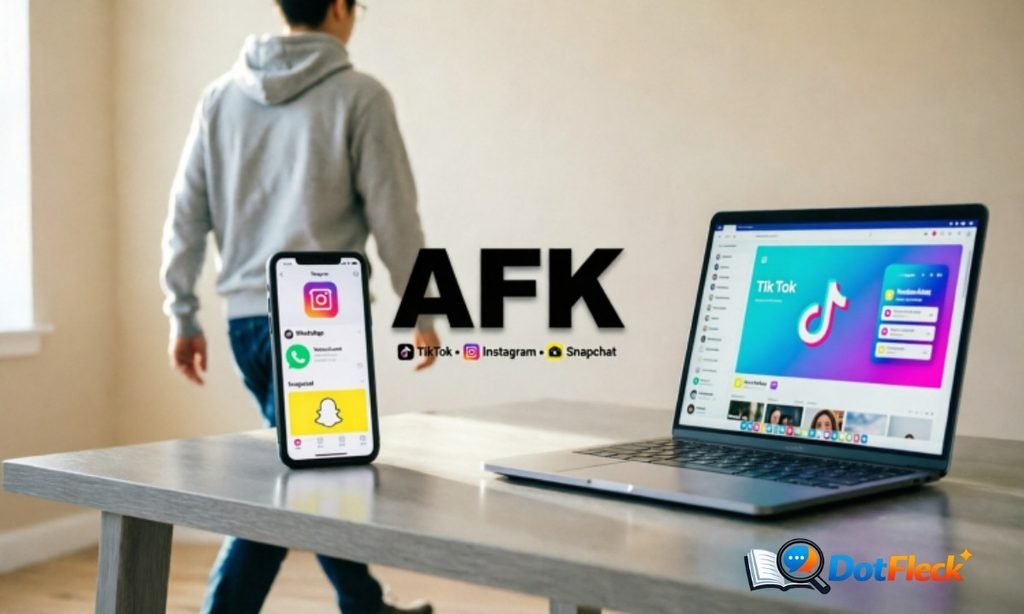
The core meaning of AFK doesn’t change much depending on where you see it, but the tone and stakes do.
| Platform | How AFK Is Used |
| Texting (iMessage, WhatsApp) | Casual heads up before going quiet |
| Discord | Status marker, sometimes automatic after inactivity |
| Online games | Warning to teammates before disconnecting or idling |
| Instagram/Snapchat DMs | Quick excuse for a delayed reply |
| Work Slack (informal teams) | Used loosely, though “stepping away” is more professional |
In gaming voice chat, AFK often gets said out loud too, not just typed. “I’m AFK for a sec” has become normal spoken slang among gamers, which is a bit unusual for an acronym that started as pure text shorthand.
Discord actually has a built in AFK feature. If you’re inactive in a voice channel for too long, the app can automatically move you to a designated “AFK channel.” That’s a small detail a lot of beginner guides skip, and it trips people up the first time it happens to them.
Does It Mean Something Different From a Girl or a Guy?
Honestly, no. This is one of those questions people search for out of curiosity, but AFK doesn’t carry a gendered meaning.
When a girl sends “afk,” it means the same thing as when a guy sends it: she’s stepping away and will reply later. The acronym is functional, not flirty or coded language.
That said, context around the message can shift how it reads. “afk, love you” between partners obviously carries warmth that “afk, meeting” doesn’t. But that’s the surrounding words doing the work, not the acronym itself.
AFK in a Medical Context
This one surprises people. Outside of texting slang, AFK also appears in medical documentation, where it can stand for “Above Knee” amputation, most often written as AFK or AKA depending on the source and specialty.
It’s a completely separate usage from the texting meaning and shows up almost exclusively in clinical notes, orthopedic charts, or prosthetics discussions. If you see AFK on a hospital form or in a doctor’s note, it has nothing to do with gaming or texting slang.
This is worth mentioning because a surprising number of guides ignore it entirely, and someone researching a family member’s medical paperwork could genuinely get confused searching this term online.
AFK on Instagram and Social Media

On Instagram, AFK usually shows up in DMs, story replies, or comments when someone needs to step away mid conversation. It’s less common in captions or bios, though you’ll occasionally see it used jokingly, like “AFK till Monday” as a way of announcing a digital detox.
Some people also use it half sarcastically when they’re clearly still online but don’t want to engage. “AFK” posted under a comment thread can sometimes mean “I’m choosing not to respond right now,” which is a subtler, more modern twist on the original meaning.
Read Also : RN Meaning in Text
What AFK Looks Like in Real Conversations
Seeing it in context helps more than any dictionary definition. Here are a few realistic examples.
Between friends: “omg wait afk, my mom’s calling me” “kk lmk when ur back”
In a group chat: “heads up I’ll be afk for the next hour, work stuff” “noted, we’ll wait on you for the plan”
During online gaming: “afk 2 min, doorbell” “bro we’re mid raid 😭”
On a dating app or casual chat: “afk for dinner, don’t disappear on me lol”
Notice how the tone shifts depending on the relationship and setting, even though the acronym itself stays identical every time.
When to Use AFK (and When to Skip It)
AFK works best in casual, low stakes conversations. Texting friends, gaming with teammates, or chatting in a Discord server are all natural fits.
It’s less appropriate in formal settings. A work email to a client shouldn’t include “AFK for lunch.” That’s where phrases like “stepping away” or “out of office” fit the tone better.
A useful rule of thumb: if the conversation already uses casual abbreviations like “lol,” “brb,” or “idk,” AFK will fit right in. If the tone is more formal, it’ll stick out.
Common Mistakes People Make With AFK
A few slip ups happen often enough that they’re worth flagging directly.
- Using it without context. Just typing “afk” with nothing else can confuse people who don’t game or aren’t used to internet shorthand. Adding a quick reason or timeframe helps a lot.
- Confusing it with “idle.” In games like Discord or certain apps, “idle” is an automatic status set by inactivity, while AFK is something the user typically announces themselves. They’re related but not identical.
- Assuming it means the same thing everywhere. As covered above, the medical usage is completely different from the texting one, and mixing them up in the wrong context can cause real confusion.
- Overusing it in professional chats. It’s fine for casual work Slack channels among close coworkers, but using it with clients or higher ups can come across as unprofessional.
One thing that’s changed recently: with more workplaces using Slack and Teams casually, AFK has started creeping into semi professional spaces where it wouldn’t have appeared a decade ago. It’s still not something you’d use in an email, but internal chat culture has loosened up quite a bit.
Related Terms Worth Knowing
A handful of similar abbreviations tend to show up alongside AFK, and knowing the difference helps you use each one correctly.
- BRB – Be right back, usually shorter and more immediate than AFK
- IDLE – An automatic status, not a self announced one
- OOO – Out of office, the more formal workplace equivalent
- GTG – Got to go, often signals the conversation is ending, not pausing
- DND – Do not disturb, a status rather than an action
- AFK farming – A gaming term for automating repetitive tasks while the player is away from the keyboard
Learning these distinctions makes texting and gaming chat feel a lot less like decoding a foreign language.
FAQs
What does AFK mean when someone texts it to you?
It means they’re stepping away from their phone or device for a while and won’t respond immediately. It’s not a way of ending the conversation, just pausing it. Most people follow up once they’re back online.
Is AFK rude to say in a conversation?
Not at all. It’s actually considered polite in most casual settings because it explains a delay instead of leaving someone on read with no context. The tone depends more on how it’s phrased than the acronym itself.
What’s the difference between AFK and BRB?
BRB usually implies a very short break, like a few minutes. AFK is more open ended and can mean anywhere from a few minutes to several hours, depending on the situation and how it’s used.
Does AFK mean the same thing in Discord as in texting?
Mostly yes, though Discord adds an automated layer. Discord can mark you as AFK after a period of inactivity in a voice channel, even if you didn’t type the word yourself, which is different from the manual way it’s used in texting.
Can AFK be used in a professional setting?
It depends on the workplace culture. Casual internal chats among coworkers sometimes allow it, but formal communication like emails or client messages should stick with “stepping away” or “will respond shortly” instead.
Why do gamers use AFK so much more than other groups?
Because timing matters in multiplayer games. If a player disappears mid match without warning, it can cost the team progress or resources, so announcing AFK status became a practical habit rather than just internet slang.
Final Thoughts
AFK might look like a small, throwaway acronym, but it carries a surprising amount of context depending on where you see it. In a text thread, it’s a casual heads up. In gaming, it’s practically etiquette. In medical paperwork, it means something else altogether.
Once you know the difference, the term stops being confusing and starts feeling like second nature, the same way “lol” or “omw” eventually did. Next time it pops up in your messages, you’ll know exactly what’s going on, and probably why.

Ethan Whitmore is an English language writer who enjoys making grammar, word meanings, and modern slang simple and easy to understand. His content focuses on clear explanations, practical examples, and everyday English usage.