
You open Instagram and see your friends at a beach party you weren’t invited to. Your chest tightens a little. You feel that pull of “I should be there too.” That reaction has a name, and it is FOMO.
This short slang term is one of the most used words in texting, social media, and even marketing today. It shows up in group chats, captions, comments, and casual conversations everywhere you look. But while most people have seen the word, not everyone knows its full meaning, its tone, or how to use it correctly.
This guide breaks down the true meaning behind the term, where it shows up in real conversations, whether it feels positive or negative, and how to reply when someone sends it your way. By the end, you will understand this internet expression completely and never feel confused by it again.
What Does “FOMO” Mean in Text?
FOMO stands for “Fear Of Missing Out.” It describes the anxious or uneasy feeling that something exciting, fun, or important is happening somewhere else, and you are not part of it.
In texting, this acronym is usually dropped into a sentence as a short reaction. For example:
- “Everyone is at the concert tonight. I have such bad FOMO right now.”
- “Saw your vacation pics. Major FOMO.”
The word works as both a noun and a feeling. People say they “have it,” they are “getting it,” or something is “giving them” that anxious pull. All of these describe the same emotion: a mix of regret, curiosity, and mild worry about missing an experience.
The Most Common Meanings of “FOMO”
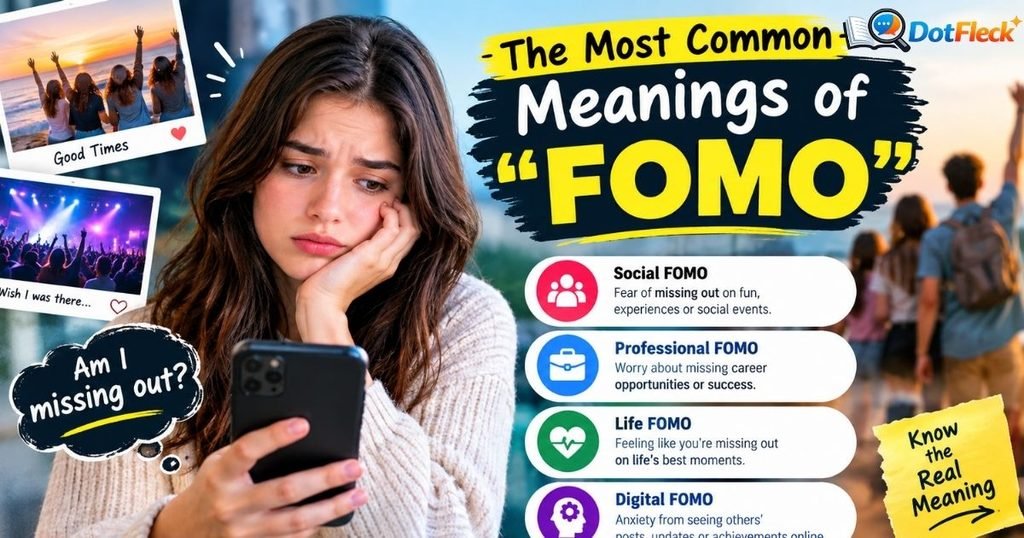
This slang word is not limited to one situation. It changes shape depending on where and how it is used. Here are the four most common contexts people run into.
1. Missing Social Events
This is the original and most classic use of the term. It happens when someone hears about a party, dinner, trip, or gathering they were not part of, and a wave of regret follows.
Example: “I skipped the get together and now I have serious FOMO.”
2. Social Media Pressure
Scrolling through Instagram, TikTok, or Snapchat and seeing curated highlights of other people’s lives is one of the biggest triggers for this feeling. Seeing filtered, exciting posts can create a false sense that everyone else is living a better life than you are.
3. Online Trends and Virality
The same anxious pull applies to trends. When a challenge, meme, or sound goes viral and someone feels pressure to jump on it before it fades, that rush to participate is this exact reaction in action.
4. Buying or Spending Decisions
This slang concept plays a big role in shopping too. Limited time deals, low stock warnings, and flash sales are built to trigger that anxious urgency so people buy before they miss the chance.
| Context | What Triggers The Feeling | Example Phrase |
| Social events | Parties, trips, dinners | “You guys went without me? FOMO.” |
| Social media | Curated highlight posts | “This trip pic is giving me FOMO.” |
| Online trends | Viral challenges or sounds | “I need to try this before it’s gone.” |
| Shopping | Sales, limited stock | “Only 2 left in stock triggered my FOMO.” |
FOMO Meaning in Spanish
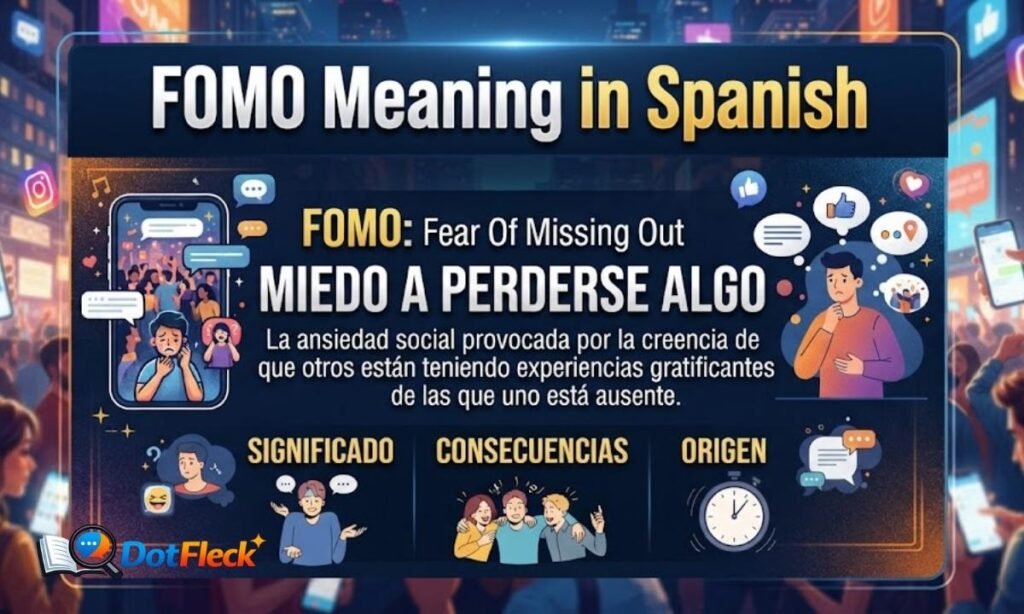
In Spanish, this word usually keeps the same English acronym because it started online and spread globally as internet slang rather than being translated locally. The concept is normally explained as “miedo a perderse algo,” which literally means “fear of missing out on something.” Spanish speakers commonly write “tengo FOMO” the same way English speakers say they have that feeling, and the emotional meaning behind it stays identical across both languages.
How “FOMO” Is Used in Real Conversations
This term changes tone depending on the platform and the relationship between the people texting. Here is how it plays out across different spaces online and offline.
Friends & Casual Texting
Among friends, this reaction is light and casual. It is often used jokingly to react to plans, photos, or updates shared in a group chat, without any real hard feelings involved.
Instagram & Snapchat
On social platforms, the phrase usually appears in comments or captions reacting to someone else’s post. It is a quick way to show playful envy in a light, non serious tone rather than genuine resentment.
Dating Apps
On dating apps, this expression can carry a flirty undertone. Someone might say they feel that pull about missing time with a match, which hints at interest rather than actual anxiety about an event.
Gaming & Online Communities
In gaming, this concept often refers to limited time events, skins, or rewards. Players use the term to describe the pressure to log in and grab something before it disappears forever.
Work or Professional Chat
In workplace messaging, the word is usually kept light, such as joking about missing a meeting or team lunch. It is rarely appropriate in formal or client facing communication, so tone matters here.
FOMO Meaning in Trading
In finance and trading circles, this term has a specific and important meaning. It describes the impulse to buy a stock, crypto asset, or investment because its price is rising fast and a trader worries they will miss out on gains. This kind of decision making often leads to buying near a peak price right before a drop, which is why financial educators warn new investors to recognize and avoid this emotional pattern before it costs them money.
Is “FOMO” Rude, Flirty, or Offensive?
This slang word is generally harmless and casual, but its tone can shift quite a bit depending on how it gets used in a sentence.
Positive use:
Used to express playful envy or excitement about something fun happening nearby. Example: “That festival looks amazing, I have such FOMO!”
Negative use:
Can feel guilt tripping if someone uses the phrase to pressure another person into attending something they do not actually want to do. Example: “You’re really not coming? You’ll get major FOMO later.”
Flirty use:
Can hint at wanting someone’s attention or company in a subtle, teasing way. Example: “I have FOMO not being at that party with you.”
FOMO Meaning in Social Media
On social media, this reaction describes the emotional response people feel when scrolling through other users’ posts, stories, and reels. Platforms are designed around constant updates, which keeps that anxious pull active almost every time someone opens an app. This is also why influencers and brands intentionally create urgency, because that emotional trigger drives clicks, comments, and purchases far more effectively than a plain announcement would.
How to Respond When Someone Says “FOMO”
Knowing how to reply keeps the conversation natural instead of awkward. Here are reply options suited to different situations and relationships.
Casual Replies
- “Ha, don’t worry, next time you’re coming!”
- “Same honestly, wish I was there too.”
Funny Replies
- “That feeling is temporary, but these photos are forever.”
- “Sorry not sorry, it was epic.”
Neutral Replies
- “Yeah it was fun, you’ll catch the next one.”
- “I get it, that happens to me too sometimes.”
Professional Replies
- “No worries, I’ll send you the notes from the meeting.”
- “We missed you, let’s catch up on it tomorrow.”
Common Misunderstandings About “FOMO”
Even though this word is widely used, people sometimes read it the wrong way in conversation. Here are the most common mix ups worth knowing about.
1. Thinking it is anger
This feeling is not anger. It sits closer to disappointment or longing, not frustration directed at another person.
2. Confusing it with “joking jealousy”
It can look like jealousy on the surface, but it is really about wanting an experience, not resenting the person who had it.
3. Assuming it only applies to parties
This reaction applies to shopping, trends, career moves, trading, and everyday life, not only to social gatherings or nights out.
4. Thinking it is always negative
Many uses of this term are lighthearted and even complimentary toward the event or person being talked about, rather than bitter.
Similar Slang Terms You Should Know
This word belongs to a small family of related internet slang worth learning together, since they often appear in the same conversations.
| Term | Meaning |
| JOMO | Joy Of Missing Out, the opposite reaction |
| YOLO | You Only Live Once, encourages seizing the moment |
| FOBO | Fear Of Better Options, anxiety over making the wrong choice |
| FOLO | Fear Of Losing Out, a close cousin often used in trading |
When You Should Avoid Using “FOMO”
While this slang fits well into casual chats, there are settings where it should be avoided entirely.
1. Professional Emails
Formal emails should stick to clear, professional language rather than casual internet slang.
2. Serious Conversations
If someone is discussing a real loss or a difficult decision, dropping this phrase in can come across as dismissive of what they are going through.
3. Cross-cultural Chats
Not everyone recognizes internet slang. Using this term with someone unfamiliar with English internet culture may cause confusion instead of connection.
4. Academic or Official Writing
Reports, essays, and official documents should avoid slang entirely, and this word is no exception to that rule.
FAQs
What does FOMO mean in a chat?
It means Fear Of Missing Out, used when someone feels left out of something fun or exciting.
Is FOMO good or bad?
It can be either. It is often playful, but it can turn negative if used to guilt or pressure someone.
What is FOMO in Urdu?
In Urdu, it is best understood as “kuch chootne ka dar,” meaning the fear of something slipping away or being missed.
What is FOMO in Gen Z slang?
For Gen Z, it is a daily expression for the anxiety of missing trends, events, or social media moments in real time.
Conclusion
This small slang term has grown from a niche business phrase into one of the most recognizable expressions online. Whether it shows up in a group chat, a comment section, a trading app, or a casual text from a friend, the meaning stays rooted in one simple idea: not wanting to miss out on something good.
Now that you know what FOMO really means, how it shifts across platforms, and how to respond when you see it, you can use this slang with confidence and read it correctly every single time it appears in your conversations.

Ethan Whitmore is an English language writer who enjoys making grammar, word meanings, and modern slang simple and easy to understand. His content focuses on clear explanations, practical examples, and everyday English usage.