
You are texting someone, everything feels normal, and then you see it. “HBU?” Just three letters sitting at the end of their message. No explanation, no context, nothing. For a second you wonder if you missed something important, or if you are supposed to know some secret code that everyone else already understands.
Take a breath. You are not behind on texting culture, and you have not missed anything embarrassing. HBU is one of the most common little abbreviations used in everyday chats, and once you know what it means, you will start noticing it everywhere, from WhatsApp to Instagram DMs to gaming lobbies.
This guide breaks down exactly what HBU means, how people actually use it in 2026, when it can feel a little cold or flirty, and how to reply so you never freeze up mid conversation again.
What Does HBU Mean in Text?

HBU stands for “How About You?” It is a short, casual way of returning a question back to the person you are texting, usually right after you answer something about yourself. It is friendly, quick to type, and used across almost every messaging app, from group chats to dating apps to gaming servers.
That is the whole mystery. No hidden meaning, no secret slang trick. It is simply a fast way of saying “your turn” in a conversation.
The Most Common HBU Meanings
While “How About You?” is the meaning that fits almost every situation, the tone behind HBU can shift slightly depending on where and how it is used. Here are the main ways people use it in real texting conversations.
1. Asking the Same Question Back
This is the classic, everyday use. Someone asks you how you are, you answer, and then you toss the same question back to them using HBU instead of typing the full sentence again.
Example:
A: I’m doing okay, just a bit tired. HBU? B: Same here, long day at work.
It saves time and keeps the exchange feeling natural rather than repetitive.
2. Checking Someone’s Condition
Sometimes HBU is less about small talk and more about genuinely checking in on how someone is feeling or doing, especially after they mention something personal.
Example:
A: I had a rough morning, honestly. B: Sorry to hear that. HBU, are you feeling better now?
In this case, HBU carries a small layer of care. The person is not just filling space, they are actually curious about your wellbeing.
3. Casual Conversation Filler
HBU is also used simply to keep a conversation moving when neither person has much to add. It works like a soft nudge that says “I’m still here, keep talking.”
Example:
A: Not much happening today. B: Same, pretty quiet here too. HBU?
This kind of HBU is not deep. It is a texting habit more than a real question, and both sides usually know that.
4. Friendly Agreement or Continuation
Sometimes people use HBU right after agreeing with an opinion, almost like an invitation to keep the topic going rather than switch subjects.
Example:
A: I think this show is actually really underrated. B: Totally agree. HBU, have you seen the new season yet?
Here HBU works less like a question and more like a conversational bridge that keeps the chat flowing naturally.
How “HBU” Is Used in Real Conversations
The core meaning of HBU stays the same everywhere, but the vibe around it changes depending on the platform. Here is how it typically plays out across different spaces.
Friends & Casual Texting
Among close friends, HBU is used constantly and without much thought. Nobody is analyzing the tone, it is just a normal part of daily texting.
Example:
A: Just finished dinner, so full lol. HBU? B: About to start mine, starving.
Friends use HBU because it feels effortless. There is no pressure attached to it, it is simply how casual chats move along.
HBU Meaning on Instagram & Snapchat
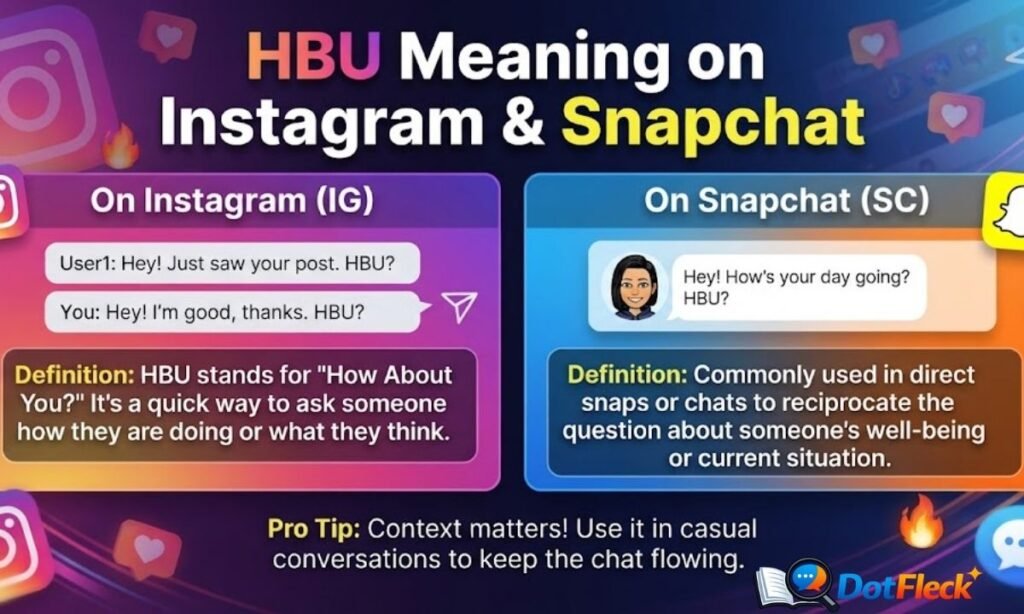
On social platforms, HBU shows up a lot in direct messages, comment replies, and story reactions. Since these platforms favor quick exchanges, short forms like HBU fit naturally.
Example:
A: Loved your last post, the lighting was perfect. B: Thank you so much! HBU, how has your week been?
On these apps, HBU often signals that someone wants to keep the interaction going instead of letting the conversation end after one message.
HBU Meaning in Dating Apps
On dating apps, HBU shows up a lot during the early stages of a conversation, when both people are still learning basic things about each other. It works as a light way to keep interest going without sounding too intense.
Example:
A: I’m more of a coffee shop person than a bar person. B: Same, way more my vibe. HBU, weekends or weekday hangouts?
Used this way, HBU feels easy and low pressure, which is exactly why it works so well when two people are just getting to know each other.
HBU Meaning in Gaming & Online Communities
In gaming chats and online communities, HBU usually keeps its standard meaning, but it can occasionally be used more loosely, almost like checking in on someone’s status or availability rather than their mood.
Example:
A: Just finished my match, that was intense. HBU, you free for another round?
In these spaces, conversations move fast, so short forms like HBU help people communicate without slowing down the pace of the game or chat.
HBU Meaning in Work or Professional Chat
HBU almost never belongs in formal workplace communication, but it can occasionally slip into casual internal chats between coworkers who are already friendly with each other, such as quick messages on a team chat app during a break.
Example:
A: Grabbing a coffee, want anything? B: I’m good, thanks. HBU, tired today?
Even then, it stays limited to informal exchanges. It would feel out of place in an email, a report, or any conversation involving clients or supervisors.
| Read More Articles |
| Keep vs Kept: Easy Past Tense Rules Explained |
| FOMO Meaning: The Powerful Truth Behind This Popular Slang |
| 👉 Whose or Who’s? Finally Get It Right |
Is “HBU” Rude, Flirty, or Offensive?
HBU on its own is neither rude nor offensive. It is simply short for a normal question. However, tone and context can shape how it feels to the person receiving it.
When it feels positive:
- Used right after answering someone’s question, showing genuine interest in return
- Sent in a warm, ongoing conversation between friends
- Paired with follow up questions rather than left as a dead end
When it can feel cold:
- Sent as a one word reply with nothing else attached
- Used after someone shares something emotional or serious
- Sent without any punctuation or warmth, making it feel rushed or disinterested
Can it be flirty?
Yes, HBU can carry a flirty undertone depending on who is texting and what came before it. On dating apps or in a conversation with someone you are interested in, HBU often works as a gentle way to keep the exchange alive and show curiosity about the other person without being too forward. The flirtiness comes from the surrounding conversation, not from the abbreviation itself.
How to Respond When Someone Says “HBU”
Replying to HBU is simple once you know the tone you want to match. Here are some options depending on the mood of the conversation.
Casual Replies
- I’m good, just relaxing today
- Pretty tired honestly, long day
- Nothing much, just scrolling my phone
Funny Replies
- Surviving, barely, lol
- Running on coffee and bad decisions
- Living my best chaotic life right now
Neutral Replies
- I’m okay, thanks for asking
- Doing fine, just a normal day
- All good here, nothing new
Professional Replies
- Doing well, thank you. How has your day been?
- I’m good, thanks for checking in
- All good on my end, hope things are going smoothly for you too
Matching the tone of the person you are texting makes the conversation feel more natural, whether that means keeping it playful or keeping it simple.
Common Misunderstandings About “HBU Meaning“
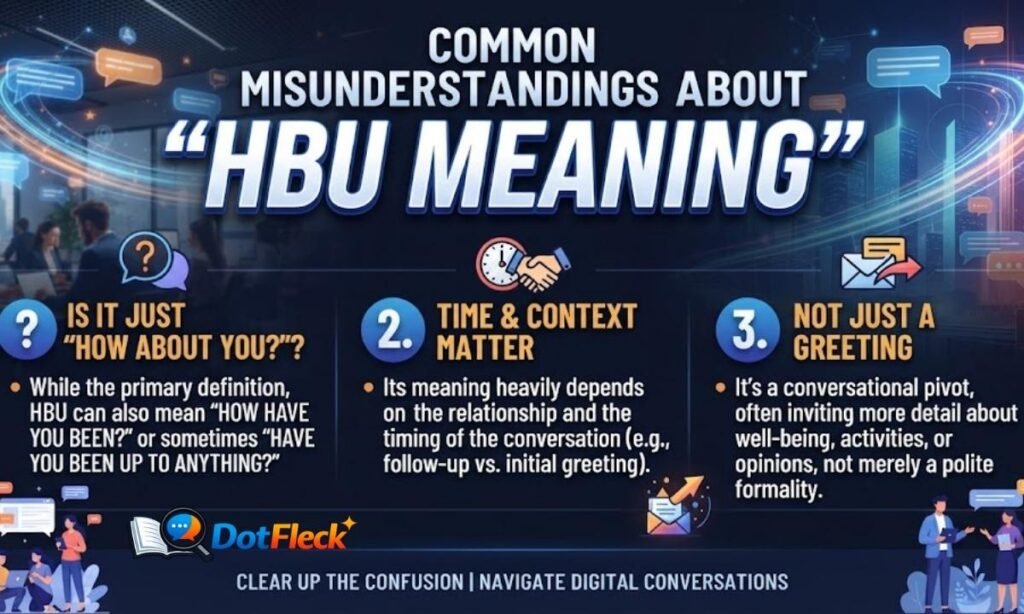
Even though HBU is a small abbreviation, a surprising number of people misread its tone or purpose. Here are the most common mix ups.
1. Thinking it is a rude shortcut
Some people assume that shortening a question means the sender is being lazy or dismissive. In reality, HBU is just a normal part of fast texting culture and rarely carries any negative intent.
2. Confusing it with other abbreviations
HBU is sometimes mixed up with similar looking texting shortcuts, especially ones that also start with H or end with U. This mix up usually happens when someone is unfamiliar with newer texting slang and assumes every abbreviation means something more complicated than it actually does.
3. Assuming it has deep meaning
Because it looks like a coded message, some people overanalyze HBU as if it carries a hidden emotional signal. Most of the time, it is simply a habit picked up from everyday texting, nothing more.
4. Thinking it is only for teenagers
While HBU is common among younger texters, it is used across all age groups now, especially anyone who spends time messaging on apps regularly. Plenty of adults use it in casual conversations with friends, family, or partners.
Similar Slang Terms You Should Know
HBU is not the only shortcut used to bounce a question back during a chat. Here are a few related terms and how they compare.
| Term | Full Meaning | Typical Use |
| HBU | How About You | Returning a question casually |
| WBU | What About You | Almost identical to HBU, slightly more common in some regions |
| HBY | How Bout You | A less common variation, same core meaning |
| SU | Sup, short for what’s up | Used to open a conversation, not to return one |
| WYD | What You Doing | Asking about someone’s current activity |
| NM | Not Much | A short reply describing your current situation |
Knowing these related terms helps you follow fast paced conversations without needing to pause and decode every message.
When You Should Avoid Using “HBU”
HBU works well in casual settings, but there are moments where it can feel out of place or even a little careless. Here is when it is better to avoid it.
Professional Emails
Emails are expected to follow a formal tone, even when the relationship between coworkers is friendly. Using HBU in an email can come across as unpolished or too relaxed for the setting.
Job Interviews or Work Reports
Any communication tied to interviews, evaluations, or official reports should stay clear of texting shortcuts entirely. HBU has no place in situations where clarity and professionalism matter most.
Cross-cultural Conversations
Not everyone is familiar with English texting slang, especially people who are newer to a language or unfamiliar with informal abbreviations. In these situations, spelling out the full question avoids confusion.
Sensitive Topics
If someone shares something difficult, such as a loss, a health concern, or a stressful situation, replying with a short “HBU” can feel dismissive, even if that is not the intention. Taking the time to respond with full sentences shows that you are actually paying attention to what they shared.
Frequently Asked Questions
What does HBU mean in text?
HBU means “How About You?” It is used to return a question back to the person you are chatting with, usually right after answering something about yourself.
What does it mean when a girl says HBU?
When a girl says HBU, it almost always carries the same standard meaning, she is asking the same question back or checking in on how you are doing. Depending on the conversation, it can also be a light way of keeping the chat going, especially if the exchange already feels friendly or flirty.
Is it WBU or HBU?
Both are correct and mean the same thing. HBU stands for “How About You” while WBU stands for “What About You.” The choice between them usually comes down to personal habit rather than any real difference in meaning.
Is it HBU or HBY?
HBU is far more common and widely recognized across texting and social platforms. HBY, short for “How Bout You,” carries the same meaning but shows up much less often in everyday conversations.
Final Thoughts
HBU is one of those small texting habits that looks confusing at first but turns out to be completely harmless once you understand it. It simply means “How About You?” and works as a quick, friendly way to keep a conversation balanced instead of one sided.
Whether you see it from a friend, a match on a dating app, or a teammate in a gaming chat, the intention behind HBU is almost always the same, showing interest in return. Now that you know exactly what it means and how to respond, you will never have to pause and wonder again the next time it pops up on your screen.

Ethan Whitmore is an English language writer who enjoys making grammar, word meanings, and modern slang simple and easy to understand. His content focuses on clear explanations, practical examples, and everyday English usage.