

If you’ve ever typed hoodie or hoody and paused to wonder which one is right, you’re not alone. Both spellings show up online, on clothing tags, and in casual writing, which makes the confusion completely understandable.
The short answer is that “hoodie” is the standard, widely accepted spelling in modern English, while “hoody” is an older or informal variant that still appears occasionally. This mix-up happens because English often has more than one accepted spelling for newer, casual words, and “hoodie” simply became the popular winner over time.
Quick Answer Hoodie vs Hoody
Hoodie is the correct and most common spelling of the word for a hooded sweatshirt in modern American and British English. Hoody is an older, less common variant that some dictionaries still list, but it’s rarely used today. Stick with “hoodie” for clothing, fashion writing, and everyday conversation.
Which Is Correct: Hoodie vs Hoody?
Hoodie is correct in almost every modern context. It’s the spelling used by clothing brands, retailers, news outlets, and style guides.
“Hoody” isn’t technically wrong, but it looks outdated and can come across as a typo to most readers today. When in doubt, choose “hoodie.”
Click Here To Read : Annual vs Anual
Difference Between Both Words (Hoodie vs Hoody)
The core difference between hoodie and hoody isn’t about meaning at all. Both words describe the exact same piece of clothing: a sweatshirt or jacket with a hood attached.
The real difference is spelling preference and how modern each version feels. “Hoodie” reads as current and natural, while “hoody” feels like an older or regional leftover.
| Word | Meaning | Usage | Example | Correct Situation |
| Hoodie | A hooded sweatshirt or jacket | Standard modern spelling, used everywhere | She wore a gray hoodie to the gym. | Any context — casual writing, marketing, fashion, everyday speech |
| Hoody | Same meaning as hoodie | Older or informal spelling, rarely used now | He pulled on his hoody before the rain started. | Informal or historical text only; not recommended for formal or SEO content |
Definitions ( Hoodie vs Hoody)
Hoodie is a noun referring to a casual sweatshirt or jacket that has a hood built into the collar, often with a front pocket. It’s the spelling most people recognize instantly.
Hoody is a variant spelling with the exact same definition. Some older dictionaries and British sources list it as an alternate form, but it has largely fallen out of everyday use.
When to Use “Hoodie”
Use “hoodie” in nearly every situation, since it’s the accepted modern spelling.
- I bought a black hoodie for the fall season.
- Her hoodie has a small logo stitched on the chest.
- Pack a warm hoodie for the camping trip.
- The store sells matching hoodies for the whole family.
- He zipped up his hoodie before stepping outside.
When to Use “Hoody”
“Hoody” appears mostly in older texts, some British writing, or informal contexts where the writer isn’t following current style standards.
- My grandfather still calls it a hoody, not a hoodie.
- The vintage catalog listed the item as a hoody.
- She found an old hoody in the back of the closet.
- Some older British novels use hoody instead of hoodie.
- The secondhand shop labeled the jacket a hoody by mistake.
Side-by-Side Comparison Hoodie vs Hoody
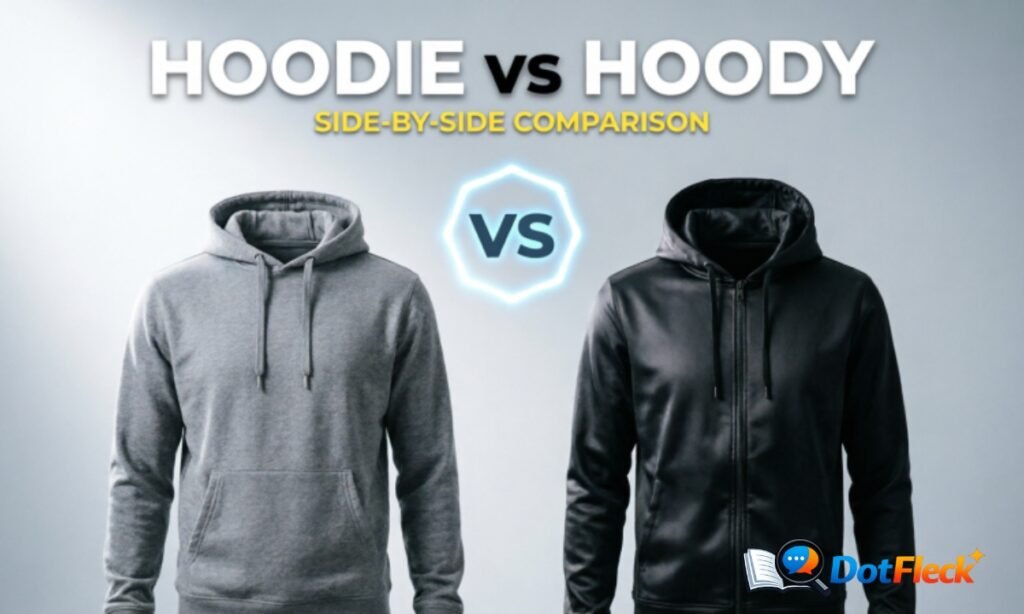
| Feature | Hoodie | Hoody |
| Modern usage | Very common | Rare |
| Dictionary status | Primary spelling | Listed as a variant |
| Used by brands and retailers | Yes, almost exclusively | Almost never |
| Feels current | Yes | No, feels outdated |
| Recommended for writing | Yes | No |
| SEO and search volume | Much higher | Much lower |
Click Here To Read : Everyday vs Every Day
Common Mistakes Hoodie vs Hoody
Many learners assume “hoody” is simply the British spelling and “hoodie” is American, similar to “color” versus “colour.” That assumption is incorrect, since “hoodie” is standard in both American and British English today.
Another common mistake is switching between the two spellings within the same piece of writing. Consistency matters, so once you pick “hoodie,” stick with it throughout your text.
Some writers also treat “hoody” as more formal because it looks shorter or older. In reality, it just reads as a spelling mistake to most modern readers.
Easy Trick to Remember Hoodie vs Hoody
Think of the word “movie.” Nobody spells it “movy,” right? Picture “hoodie” the same way, ending in “-ie,” just like “movie,” “cookie,” and “rookie.” That small visual link makes the correct spelling stick.
Real-Life Examples Hoodie vs Hoody

- I threw on my hoodie before walking the dog this morning.
- The team ordered custom hoodies with the school mascot.
- She washed her favorite hoodie twice before the trip.
- His hoodie pocket is perfect for holding a phone.
- The store’s best-seller this winter is a fleece-lined hoodie.
- My sister borrowed my hoodie and never gave it back.
- Every student on the trip wore a matching blue hoodie.
- He kept his hoodie hood up during the light drizzle.
- The brand’s oversized hoodie sold out within a day.
- I layered a hoodie under my jacket for extra warmth.
Read Now : Brief vs Debrief
Common Questions Hoodie vs Hoody
Is “hoody” correct? Yes, technically, but it’s an outdated or informal spelling. “Hoodie” is the version accepted almost everywhere today.
Can I use “hoody” instead of “hoodie”? You can, but readers may see it as a typo. For clear, modern writing, choose “hoodie” instead.
Why do people confuse hoodie and hoody? The confusion comes from the word’s informal origins. Casual words often develop multiple spellings before one becomes the standard.
Similar Grammar Confusions
- Grey vs Gray
- Sweater vs Jumper
- Sneaker vs Trainer
- Jewelry vs Jewellery
- T-shirt vs Tee shirt
FAQs (Hoodie vs Hoody)
Is hoodie the correct spelling?
Yes, “hoodie” is the correct and widely accepted spelling in both American and British English today. It’s used consistently by clothing brands, dictionaries, and everyday writers, making it the safest choice for any type of writing.
Does hoody mean something different from hoodie?
No, both words describe the exact same hooded sweatshirt. The only difference is spelling, with “hoody” being an older, less common form that has mostly disappeared from modern usage.
Which spelling do clothing brands use?
Nearly all clothing brands, from major retailers to small shops, use “hoodie” on labels, websites, and product descriptions. This consistency has helped make “hoodie” the clear industry standard.
Is hoody a British spelling of hoodie?
Not exactly. While “hoody” appears more often in older or informal British writing, “hoodie” is still the standard spelling in the UK today, just like in the United States.
Will using “hoody” be considered a mistake?
In most modern writing, yes, since readers and editors expect “hoodie.” Using “hoody” won’t confuse anyone about meaning, but it can make your writing look outdated or careless.
Key Takeaways Hoodie vs Hoody
- “Hoodie” is the standard, modern spelling used in both American and British English.
- “Hoody” is an older variant that’s rarely used today and can look like a typo.
- Both words share the exact same meaning: a hooded sweatshirt or jacket.
- Clothing brands, dictionaries, and style guides overwhelmingly favor “hoodie.”
- Remember the “-ie” ending by comparing it to words like “movie” and “cookie.”
- Stay consistent and choose one spelling throughout your writing, ideally “hoodie.”
Conclusion Hoodie vs Hoody
Choosing between hoodie and hoody comes down to one simple rule: go with “hoodie.” It’s the spelling that matches how brands, dictionaries, and everyday speakers use the word, and it instantly reads as current and correct.
While “hoody” isn’t a grammar error, it can make your writing feel dated or inconsistent. The next time you write about that comfortable hooded sweatshirt, trust the “-ie” ending, and your writing will look polished, professional, and easy to trust.

Ethan Whitmore is an English language writer who enjoys making grammar, word meanings, and modern slang simple and easy to understand. His content focuses on clear explanations, practical examples, and everyday English usage.