
NGL stands for “not gonna lie.” People drop it into a text right before saying something honest, blunt, or a little embarrassing to admit. It works as a verbal shrug that tells the other person, “I’m being real with you right now,” even when the confession is small or silly.
Quick Answer
NGL = Not Gonna Lie
It’s used to introduce an honest opinion, a confession, or a compliment that might feel awkward to say plainly. Common in texting, group chats, Instagram comments, and casual conversation among teens and young adults, though plenty of older millennials use it too.
What NGL Actually Means in Context
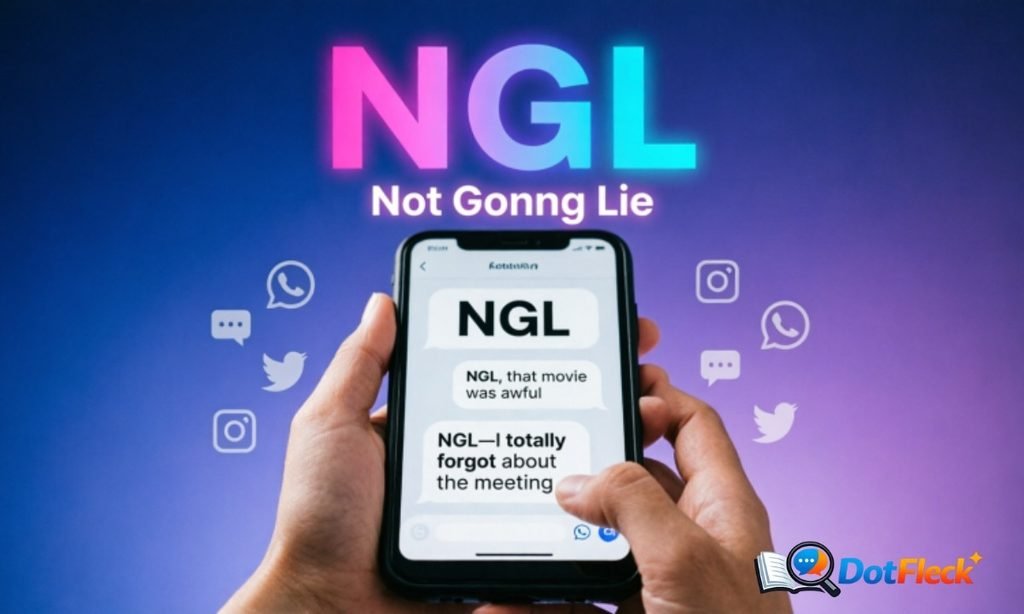
The phrase works like a small verbal cue. It flags that what follows is the sender’s genuine take, not something they’re saying to be polite or to fill space.
Someone might text “ngl that haircut is fire” instead of just “that haircut is fire.” The NGL adds a layer of sincerity, almost like saying “I mean this, I’m not just being nice.”
It’s also used before admitting something slightly unflattering. “Ngl I forgot your birthday until my calendar reminded me” softens the confession a bit by framing it as an honest slip rather than a careless one.
One thing a lot of guides miss: NGL isn’t always about honesty in the literal sense. Half the time, it’s a rhythm word. People type it out of habit before typing whatever they were going to say anyway, honest or not. Language works that way. Filler phrases pick up momentum and stick around long after their literal meaning stops mattering to the person using them.
Don’t Miss : Ensure vs Insure
NGL Meaning From a Girl vs From a Guy

The core meaning doesn’t change based on who’s texting it, but the context often does.
From a girl, NGL frequently shows up in messages about appearance, feelings, or reactions to something personal. “Ngl you looked really good today” or “ngl I was kind of hurt you didn’t text back” are typical uses. It softens vulnerability.
From a guy, it tends to show up more in reactions to events, opinions, or light teasing. “Ngl that game was actually rough” or “ngl I didn’t expect you to win that argument.” It’s less about feelings and more about admitting a take that goes against expectations.
Neither usage is a hard rule. Texting habits vary by person, not gender, and plenty of overlap exists. The pattern above is a general tendency, not a formula.
NGL on Instagram and Social Media
On Instagram, NGL shows up constantly in comments and captions. Someone posts a photo, and a comment reads “ngl this is your best pic yet.” It’s a quick way to give a compliment extra weight.
There was also an app literally called NGL, built around anonymous question and answer boxes for Instagram Stories. It let followers send anonymous messages, and it became popular around 2022 before running into controversy over misleading ad claims about revealing who sent the messages. That app borrowed the abbreviation’s name specifically because “not gonna lie” fit the whole anonymous honesty concept.
Outside of that app, the acronym is used the same way across TikTok, Snapchat, and Twitter/X. It’s platform-agnostic. Wherever people type casually, NGL tends to show up.
Does NGL Have a Medical Meaning?
Outside of texting, NGL has a few unrelated meanings depending on the field. In some laboratory and pharmaceutical contexts, NGL can refer to specific compound names or gene identifiers, but this is highly specialized and not something a general reader would run into by accident.
If you saw “NGL” in a medical chart or scientific paper, it almost certainly has nothing to do with “not gonna lie.” Context makes the difference obvious immediately. A doctor’s note and a group chat are not going to be confused for each other.
Where the Phrase Came From
Nailing down an exact origin date is tough, since abbreviations like this spread through texting and early social media rather than through any single traceable source. “Not gonna lie” as a spoken phrase has been common in casual American English for decades, especially in Black vernacular and hip-hop culture, long before texting shortened it.
The abbreviated form NGL picked up steam alongside other texting shorthand like TBH (to be honest) and IDK (I don’t know) sometime in the 2010s, as character limits and fast typing pushed people toward compressing common phrases. It’s genuinely unclear who used it first in text form, and any article claiming an exact origin point is likely guessing.
Real Conversation Examples
Here’s how NGL shows up in actual texting, across a few different situations:
Giving an honest compliment: “omg your presentation today was actually so good” “ngl I was nervous the whole time lol”
Admitting a mistake: “did you get my message from yesterday?” “ngl I saw it and just forgot to reply, my bad”
Reacting to something unexpected: “we lost by like 40 points” “ngl that’s rough, I thought you guys had it”
Softening criticism: “be honest, is my essay draft bad?” “ngl the intro needs work but the rest is solid”
Notice the pattern. NGL usually comes right before the actual point, almost like clearing your throat before saying something you mean.
When to Use NGL and When to Skip It
NGL fits casual texting, comments, and conversations with friends. It reads naturally in group chats, DMs, and social captions.
It doesn’t belong in professional emails, resumes, formal writing, or messages to someone you don’t know well. Using it with a boss or teacher can come across as too casual, even if the tone of the message is otherwise appropriate.
A decent rule of thumb: if you’d feel comfortable saying “not gonna lie” out loud in that exact conversation, typing NGL works fine. If the full phrase would sound out of place, the abbreviation will too.
Read Now : IDK Meaning in Text
Common Mistakes People Make With NGL
A few things trip people up, including some that most guides overlook entirely.
- Treating it as always sarcastic. It’s not. Most of the time it’s sincere, even when the tone around it is joking.
- Assuming it always precedes bad news. It gets used just as often for compliments and good news as it does for criticism or confessions.
- Confusing it with TBH. The two are close cousins, but TBH tends to introduce a straightforward opinion, while NGL leans slightly more toward admitting something the speaker maybe wasn’t planning to say.
- Overusing it in formal settings. Dropping NGL into a work Slack message or a cover letter reads as a mismatch in tone, even in casual workplaces.
- Assuming the acronym only exists in texting. With the NGL app’s rise and later controversy, plenty of people now associate the letters with that specific product first and the phrase second, especially younger users who encountered the app before the general abbreviation.
Terms Related to NGL
A handful of similar texting abbreviations travel in the same circles:
- TBH (to be honest)
- IMO / IMHO (in my opinion / in my humble opinion)
- FR (for real)
- LOWKEY / HIGHKEY (mildly / strongly)
- NGAF (not giving a… you get it, blunter version of not caring)
- JK (just kidding)
- IYKYK (if you know, you know)
These all cluster around the same general purpose: signaling tone or sincerity in a short burst of text, without needing full sentences to set up context.
Frequently Asked Questions
What does NGL mean in a text message?
NGL means “not gonna lie.” It’s used before a statement to signal that the speaker is being genuinely honest, whether that’s a compliment, a confession, or an opinion they weren’t originally planning to share so directly.
Is NGL always used before something negative?
No. It’s just as common before compliments, admissions of small mistakes, or surprising opinions. The phrase signals honesty, not negativity, even though people sometimes assume the two go together.
What’s the difference between NGL and TBH?
They’re close in meaning, but TBH usually introduces a plain opinion, while NGL often precedes something the speaker feels slightly hesitant or vulnerable admitting. The line between them is blurry in casual use.
Is NGL appropriate for work messages?
Generally no. It reads as casual slang and fits texting between friends better than professional communication. Even in relaxed workplace chat, it can come across as too informal depending on the audience.
Does NGL mean the same thing on every platform?
Yes, the meaning stays consistent across texting, Instagram, TikTok, and other platforms. The one exception is the standalone NGL app, which borrowed the phrase’s name for an anonymous messaging feature rather than using it as an abbreviation.
Who typically uses NGL the most?
Teens and young adults use it most often, though it’s common enough that people well into their 30s and 40s use it casually too. It’s not tied to a single age group anymore, even if it started that way.
Final Thought
NGL is a small piece of texting shorthand that carries more emotional weight than its length suggests. It signals honesty, softens confessions, and adds sincerity to compliments, all in three letters.
Once you notice it in conversation, it’s hard to miss how often people lean on it right before saying what they actually mean.

Ethan Whitmore is an English language writer who enjoys making grammar, word meanings, and modern slang simple and easy to understand. His content focuses on clear explanations, practical examples, and everyday English usage.