
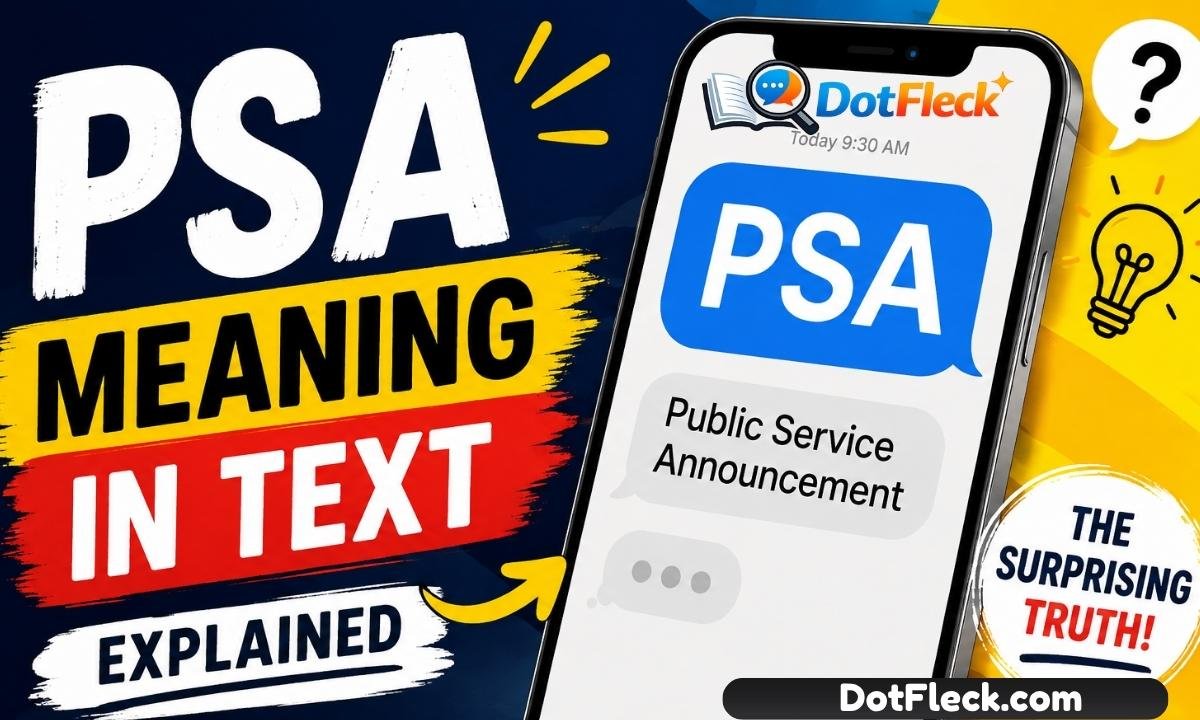
PSA in a text message stands for “Public Service Announcement.” People use it to flag information they think everyone in the chat needs to know, even if it has nothing to do with the government or an actual public broadcast. It’s a way of saying “heads up, pay attention” before dropping a piece of news, a warning, or sometimes a joke.
Quick Answer
PSA = Public Service Announcement. In texting and on social media, it’s borrowed from old TV and radio announcements and repurposed as a casual attention-getter. It can be serious (“PSA: the office is closed tomorrow”) or sarcastic (“PSA: don’t text your ex at 2am”).
What PSA Actually Means When Someone Texts It
The original PSA was a formal broadcast, the kind you’d hear between TV shows reminding people to wear seatbelts or get a flu shot. Texters kept the name but dropped the formality.
Now when a friend texts “PSA,” they’re basically saying: this next sentence matters, so don’t skim past it. It works almost like a headline. The abbreviation does the job of grabbing attention before the actual message even starts.
That’s the core of the PSA meaning in text messages. It’s less about official announcements and more about tone. It signals “listen up” in a group chat the same way raising your hand would in a room full of people talking over each other.
Read Now: FR Meaning
Where the Trend Came From
Public service announcements have been around since the 1940s, mostly through radio and television. Brands, government agencies, and nonprofits used them to spread safety messages or health advice.
The shift to texting slang happened gradually, likely through internet forums and early social media where people started borrowing broadcast language for comedic or exaggerated effect. Nobody can point to one exact moment it caught on, but it fits a pattern that’s common in online slang: take a formal phrase, strip out the seriousness, and reuse it for everyday chatter.
By the time texting and group chats became the default way friends talk, PSA had already settled into its current, looser meaning.
Read Also : FYP Meaning
How PSA Shows Up Across Platforms
The core meaning stays the same everywhere, but the tone shifts depending on where you see it.
| Platform | Typical Use |
| Text messages | Quick personal heads-up, often to a group |
| Twitter/X | Public warnings, jokes, or viral callouts |
| TikTok | Video captions, often humorous or dramatic |
| Story updates or caption disclaimers | |
| Group chats | Reminders, gossip flags, or sarcastic warnings |
On TikTok especially, PSA has become almost a genre of its own. Creators use it in captions to frame a video as urgent or important, even when the content is lighthearted.
Real Examples of PSA in Conversation

A friend group planning a weekend trip might text: “PSA the Airbnb doesn’t have parking, so carpool if you can.” That’s a straightforward, practical use.
In a family group chat, someone might send: “PSA grandma’s birthday dinner got moved to Saturday, not Sunday.” Simple, useful, no sarcasm needed.
Then there’s the joking version, which shows up constantly among younger texters. Something like: “PSA if you order pineapple on pizza we can’t be friends anymore.” Nobody thinks this is a real announcement. It’s just a funny way to make a point land harder.
A workplace Slack or text chain might use it more formally too: “PSA the printer on the third floor is out of toner again.” Same abbreviation, completely different mood depending on the room it’s used in.
Read More : BTA Meaning
When to Use It (and When to Skip It)
PSA works well when you want something to stand out at the start of a message, especially in a group where people might not read closely. It’s short, recognizable, and does its job in three letters.
It’s less useful in one-on-one texts where the message would get attention anyway. Adding “PSA” to a private conversation with your partner about dinner plans usually just sounds odd.
It also loses impact if overused. If every third text starts with PSA, the abbreviation stops signaling urgency and just becomes noise. Save it for the messages that actually need a flag.
Common Mistakes and Mix-Ups

One mix-up worth knowing: PSA has a completely unrelated medical meaning. In healthcare, PSA stands for prostate-specific antigen, a protein measured in blood tests related to prostate health. That meaning has nothing to do with texting, but it’s common enough that searching “PSA meaning” without context sometimes pulls up medical results instead of the slang definition.
Another mistake is treating PSA as interchangeable with FYI. They’re close, but not identical. FYI is neutral, almost administrative. PSA carries a bit more weight or humor, like the sender is making a small production out of the announcement.
Something a lot of guides miss: capitalization matters less than context. Whether someone types “PSA,” “psa,” or even “Psa,” the meaning doesn’t change in casual texting. Slang abbreviations like this rarely follow strict grammar rules, and native texters read them the same way regardless of case.
Similar Abbreviations You Might See Nearby
A few related terms often show up in the same kinds of messages:
- FYI (for your information) — more neutral, less dramatic
- NGL (not gonna lie) — used before an honest opinion
- TBH (to be honest) — similar honesty flag
- Heads up — the plain-English version of PSA
- Disclaimer — a more formal cousin, often used in captions
None of these are exact substitutes. Each carries a slightly different tone, which is part of why PSA has stuck around instead of being replaced by something simpler.
Frequently Asked Questions
What does PSA mean in a text from a friend?
It usually means they’re about to share something they think you need to know, whether that’s a schedule change, a warning, or a joke framed as important news. The tone depends entirely on the relationship and the context of the conversation.
Is PSA always serious?
No. Plenty of texters use it sarcastically or as a setup for a joke. The abbreviation borrows the seriousness of real public announcements but doesn’t require the message itself to be serious.
Does PSA mean the same thing on every social media platform?
The core meaning stays consistent, but the tone shifts. TikTok and Twitter tend to use it more for humor or viral moments, while texts and Slack messages often use it for genuine reminders.
Is there a difference between PSA and FYI?
Yes, slightly. FYI is more neutral and informational, while PSA tends to carry a bit more emphasis or personality, almost like the sender is making an announcement rather than just sharing a fact.
Can PSA mean something other than Public Service Announcement?
In a medical context, PSA refers to prostate-specific antigen, a term used in blood test results. That meaning is unrelated to texting slang, so context usually makes it obvious which one is intended.
Why do people still use an old broadcast term in texting?
Because it works. Three letters instantly signal “pay attention” without needing extra words, which is exactly what fast-moving group chats and social captions need.
Bottom Line
At its core, the PSA meaning in text messages hasn’t strayed far from the original idea: get people’s attention before sharing something worth knowing. What’s changed is the tone. It’s now just as likely to introduce a joke as a genuine warning.
Once you see it a few times in a group chat, the pattern becomes obvious. It’s less a formal announcement and more a texting habit, a small verbal nudge that says “this one’s worth reading.”

Ethan Whitmore is an English language writer who enjoys making grammar, word meanings, and modern slang simple and easy to understand. His content focuses on clear explanations, practical examples, and everyday English usage.