
Have you ever stopped mid-sentence and wondered whether it is spelled messege or message? It is an easy mistake to make, because the word ends with a soft “ij” sound that English writes in several different ways. A quick glance at a text, email, or social media post is often enough to make you doubt yourself.
The correct spelling is “message,” and “messege” is always a misspelling. This guide covers the meaning, pronunciation, and spelling rule behind the word, shows how it works in sentences, and clears up the confusion with “massage.” By the end, you will know how to spell message correctly and how to avoid this common error in everyday writing.
Quick Answer
The correct spelling is message. It is spelled M-E-S-S-A-G-E, with an “a” before the final “ge.” “Messege” is not a word in standard English, so it should be corrected whenever it appears.
This is true in both American and British English. There is no regional variation, so you do not need to worry about which version to use. Whether you are writing a school paper, a work email, or a quick text, the spelling stays the same.
- Correct: message
- Incorrect: messege, messuge, mesage, messadge
Meaning of “Message”
A message is a piece of information that one person or group sends to another. It can be spoken, written, or sent through a device. A note left on a desk, a voicemail, an email, and a text are all messages.
The word can also mean the main idea behind something. For example, a speech, a film, or an advertisement can have a message, which is the point it wants the audience to understand. In this sense, the word is about meaning rather than a physical note.
Here are a few quick examples of the message meaning in English:
- She left a message on his desk.
- The message of the story is that honesty matters.
- I got your message this morning.
The word comes from Old French and goes back to a Latin root related to sending. That connection to “sending” still shows up in modern phrases like “send a message.”
Why People Write “Messege” Instead of “Message”
The main reason is sound. In “message,” the last syllable is unstressed, so it sounds like “ij” rather than “aj.” Because that vowel sound is weak, the ear does not clearly tell you whether to write an “a,” an “e,” or an “i.”
Another reason is that English has other words ending in “-ege.” Words like “college,” “privilege,” and “knowledge” all end that way, and they also have the same soft “ij” sound. A writer who knows those words may assume “message” follows the same pattern, even though it does not.
Fast typing and autocorrect habits also play a part. When someone types quickly, the “a” and “e” keys are easy to swap, and a missing red underline can make the error slip through. Reading the word slowly one time is usually enough to catch it.
Messege vs Message Comparison Table
This table shows the difference at a glance. It makes the messege vs message question easy to settle.
| Feature | Message | Messege |
|---|---|---|
| Correct spelling | Yes | No |
| Found in dictionaries | Yes | No |
| Part of speech | Noun and verb | None |
| Meaning | Information sent to someone | No meaning |
| Plural | Messages | Not applicable |
| Example | “I sent you a message.” | Incorrect: “I sent you a messege.” |
The table shows that “messege” has no dictionary entry, no meaning, and no grammar role. If you see it in your writing, replace it with “message.”
Messege or Message or Massage
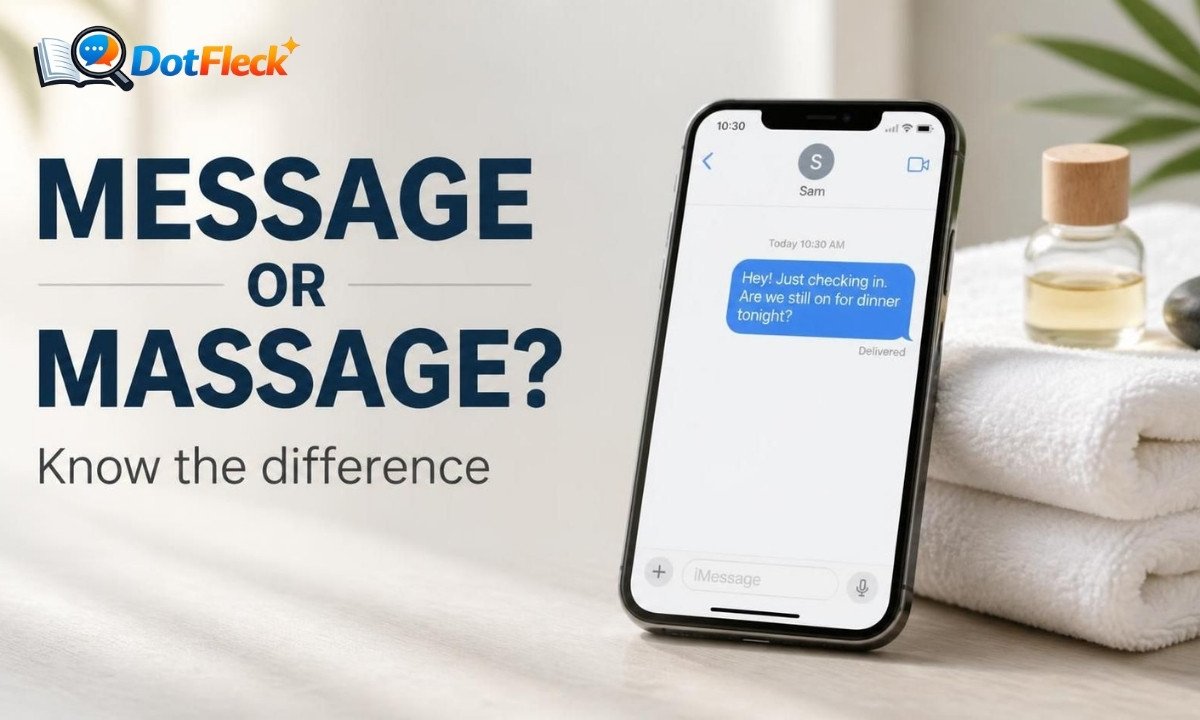
Some readers wonder about a third word, “massage.” It looks similar, but it is a completely different word. A massage is the act of rubbing or pressing the body to relax muscles or ease pain.
So the three spellings work like this. “Message” is correct for information that is sent. “Massage” is correct for a body treatment. “Messege” is always wrong.
Mixing up message and massage can lead to funny or confusing sentences. “Please send me a massage” would suggest you want a spa treatment instead of a note. Always check which meaning you intend before you type.
Message vs Massage: Pronunciation Difference
The two words sound different, even though their spellings are close. “Message” is pronounced MES-ij, with the stress on the first syllable. The second syllable is short and weak, like the end of “village.”
“Massage” is pronounced muh-SAHJ in most American speech, with the stress on the second syllable. The ending sounds like the “zh” in “beige” or the “j” in “garage.” Some speakers say it more like muh-SAHZH, and both are common in the United States.
Listening for the stress is the easiest way to tell the words apart. If the first syllable is strong, it is “message.” If the second syllable is strong, it is “massage.”
Correct Usage of “Message” in Sentences
Seeing the word in context helps lock in the spelling. Here are examples of message in a sentence across common situations:
- Please leave a message after the tone.
- I read your message twice before replying.
- The teacher wrote a short message on the board.
- Her message was clear and polite.
- He forwarded the message to the whole team.
The word also appears in common phrases. You might “get the message,” “send a message,” “take a message,” or “message received.” A text message is a short written note sent from one phone to another, and the phrase is now part of everyday speech.
Remember that “message” is a noun in these examples. It names the thing that is sent. When you add an “s,” you get the plural form, “messages,” as in “I have three new messages.”
Message as a Verb (To Message Someone)
“Message” is not only a noun. It is also used as a verb, especially in American English, to mean sending someone a written note through an app or device. For example, “I will message you later” means “I will send you a note later.”
The verb forms are simple. The past tense is “messaged,” and the present participle is “messaging.” Examples include “She messaged me an hour ago” and “We are messaging each other about the plan.”
Some style guides once treated this verb use as informal. Today it is widely accepted in everyday writing and in most workplaces. For very formal documents, you can use “send a message to” if you prefer a more traditional tone.
Common Mistakes Related to “Message”
Most errors with this word come from a few predictable patterns. Watch for these misspellings and confusions:
- Messege: the most common error, caused by the “-ege” pattern in words like “college.”
- Mesage: one “s” is missing. The word needs a double “s.”
- Messuge or messadge: the wrong vowel or an extra “d.”
- Massage: a real word, but it means something else.
- Messenger: a related word for a person or app that carries messages, which has an “n” before the final “ger.”
Another common slip is mixing up “message” and “messenger.” A messenger is the one who delivers a message. The two words are related, but they are not interchangeable.
Spelling Rule Behind “Message”
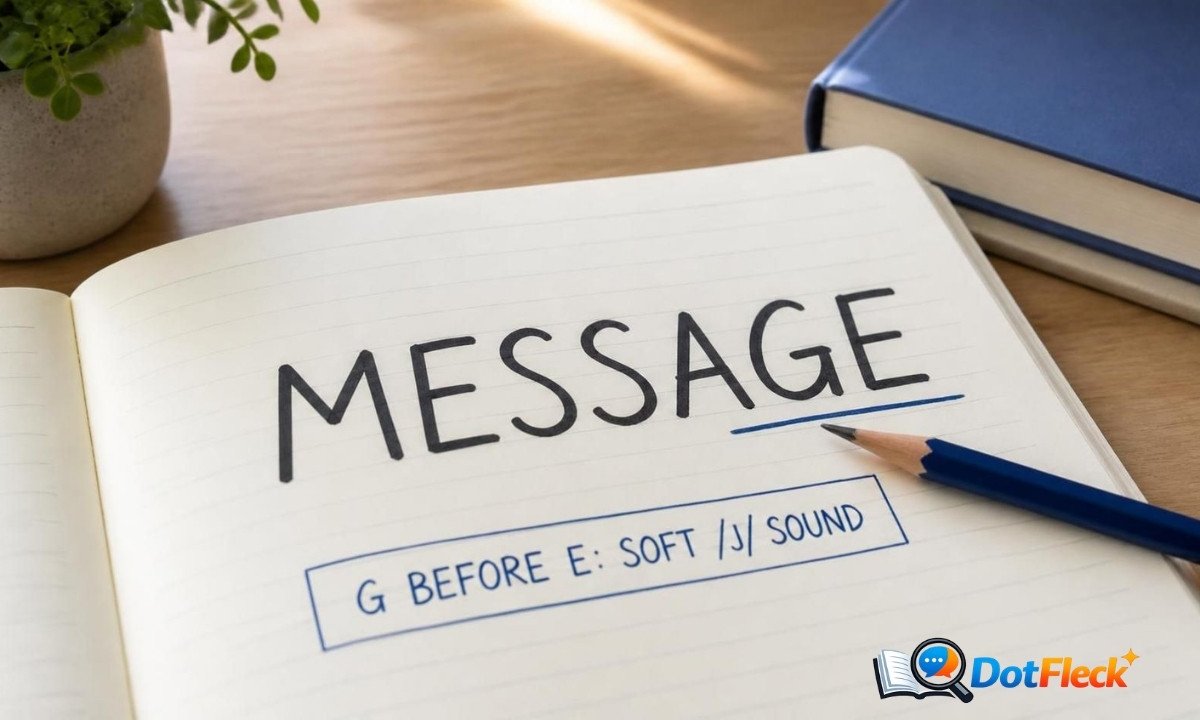
The ending “-age” is very common in English. When it is unstressed, it is usually pronounced “ij,” as in “village,” “package,” “damage,” “image,” “language,” and “message.” Since so many words follow this pattern, “-age” is a reliable guess for words with this sound.
This pattern is a helpful rule of thumb rather than a perfect law. Some words use “-ege” or “-idge” for the same sound, such as “college” and “bridge.” Even so, “message” belongs with the large “-age” group.
A simple way to apply the rule is to compare “message” with “passage.” Both have a double “s” in the middle and “-age” at the end. If you can spell “passage,” you can spell “message.”
How to Spell Message Like Rub
If you are looking for the word that means a rub, the spelling is “massage.” It has the same double “s” in the middle, but the vowels are different. The first vowel is an “a,” and the ending is “-age” again.
To keep the spellings apart, think of the letters. “Massage” has two “a” letters, one near the start and one near the end. “Message” has one “e” near the start and one “a” near the end, plus a final silent “e.”
You can also link each spelling to its meaning. A massage helps your body relax, and the word has two a’s for “aaah.” A message is something you send, and it starts with “mess,” like the pile of notes you might get in a busy inbox.
| Don’t Miss These Articles |
| Lieing or Lying? |
| Fourteen or Forteen |
American vs British English Differences
Good news for writers on both sides of the Atlantic. The spelling of “message” is the same in American and British English. The word is also spelled the same in Canada, Australia, and other English-speaking countries.
Some small differences exist in how people use the word. Americans often use “message” as a verb in casual speech, as in “message me later.” British speakers use that form too, though they may also say “text me” or “drop me a line.”
Pronunciation is also close. Both varieties say MES-ij for “message.” For “massage,” British English often stresses the first syllable, as in MASS-ahj, while American English usually stresses the second.
Related Words and Variations
Learning the word family can reinforce the spelling. These forms all keep the same core spelling:
- Messages: the plural noun, as in “I have two messages.”
- Message: the base noun or verb.
- Messaged: the past tense, as in “She messaged me yesterday.”
- Messaging: the present participle or the noun for sending messages, as in “messaging apps.”
- Messenger: a person or tool that carries a message.
The messages plural spelling is simple, because you only add “s.” There is no spelling change. In the same way, messaging spelling keeps the double “s” and drops the final “e” before “-ing.”
Compound words and phrases also appear often. Examples include “voice message,” “text message,” “message board,” and “message box.” In every one of them, the spelling of “message” stays the same.
Easy Memory Tricks
A few simple tricks can help you remember the correct spelling of message. Pick the one that feels most natural to you.
- The “mess + age” trick: break the word into “mess” and “age.” Both parts are easy to spell on their own.
- The “passage” trick: “message” rhymes in pattern with “passage.” Both use a double “s” and “-age.”
- The “a is for address” trick: a message goes to an address, and the “a” sits before the final “ge.”
- The “no E in the ending” trick: the ending is “-age,” not “-ege.” Say it as “age” like a person’s age.
You can also write the word out three times when you are unsure. Seeing the right spelling a few times helps your eye spot errors faster in the future.
When “Messege” Might Appear
Even though “messege” is a misspelling, you may still see it in some places. It can appear in rushed texts, social posts, and typed search queries where typos often go unchecked. People may also type it when they are unsure and want to see if a search engine corrects them.
It might also show up as a username, a brand name, or a stylized name, since those can use any spelling. In those cases, the spelling is a choice and not a grammar mistake. This is different from standard writing, where only “message” is correct.
If you are proofreading, treat every “messege” in regular text as an error. Replace it with “message” and check any related forms, such as “messeges,” which should be “messages.”
Why Correct Spelling Matters
Correct spelling helps your reader focus on what you are saying instead of how you wrote it. A small error in a common word like “message” can look careless, especially in a job application, a school assignment, or a business email. Readers may judge the whole piece by that one slip.
Accurate spelling also makes your writing easier to find and understand. Search tools, spell checkers, and readers all recognize “message” instantly. A misspelling can slow people down or cause them to misread your meaning.
Finally, good spelling builds confidence. Once you are sure of a word like “message,” you can write faster and with fewer second thoughts. That small habit adds up over time.
Frequently Asked Questions
What is correct, message or messege?
“Message” is correct. “Messege” is a common misspelling and does not appear in standard English dictionaries.
What is the difference between a message and a massage?
A message is information sent to someone. A massage is the act of rubbing the body to relax muscles or ease pain.
How do you spell message like text?
Spell it M-E-S-S-A-G-E. A text message uses the same spelling, and the plural is “text messages.”
What do you mean by a message?
A message is a piece of information sent from one person to another. It can also mean the main idea of a speech or story.
Final Thoughts
The answer to the messege or message question is simple: “message” is the only correct spelling. The word means information sent from one person to another, and it can also work as a verb in forms like “messaged” and “messaging.” It is pronounced MES-ij, and it is spelled the same in American and British English.
The most common mix-ups come from the “-ege” pattern in words like “college” and from the similar-looking word “massage.” Remember the “-age” ending, compare it with “passage,” and keep the meaning of each word clear. With these tricks, you can spell the word correctly every time and write with more confidence.

Ethan Whitmore is an English language writer who enjoys making grammar, word meanings, and modern slang simple and easy to understand. His content focuses on clear explanations, practical examples, and everyday English usage.