

POV stands for “point of view.” In slang, especially on TikTok and Instagram, it’s used to put the viewer directly into a scene, as if they’re the one living it. Instead of describing a situation from the outside, the caption puts you in the middle of it: “POV: you just got home from a 12-hour shift.”
That’s the short version. But the way people actually use this term has shifted a lot over the past few years, and it means slightly different things depending on where you see it.
Quick Answer
- POV = point of view, borrowed from film and photography language
- In slang, it means “imagine you’re experiencing this” or “here’s what this looks like from my/your perspective”
- Most common on TikTok, Instagram Reels, and Twitter/X captions
- Outside social media, POV can also mean something totally different (more on that below)
- It’s not gendered. It’s used the same way by anyone posting content, not specifically “from a girl” or “from a guy”
Read Slang : SYBAU Meaning in Text
Where the Slang Meaning Comes From
The term originally came from filmmaking and video games. A “POV shot” is a camera angle that shows what a character sees, rather than showing the character themselves. Think of a horror movie scene filmed as if you’re the one walking down the hallway.
Social media borrowed that idea and stripped away the technical part. You don’t need an actual first-person camera angle anymore. You just need a caption that says “POV” and a scenario people can picture themselves in.
This is roughly the same reason it took off on TikTok around 2020 and 2021. Short-form video rewards content that feels personal and immersive, and this slang term is basically a shortcut for that feeling. A creator doesn’t have to explain the whole setup. They just say “POV: your best friend forgot your birthday” and the audience fills in the rest.
Does “POV” Mean Something Different From a Girl or a Guy?
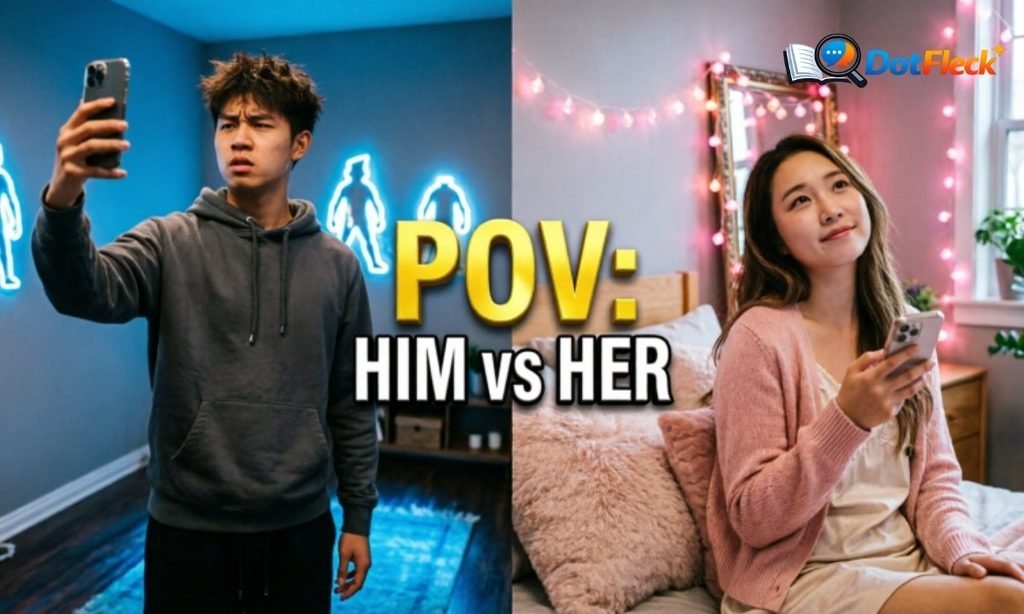
Not really, and this is where a lot of search results overcomplicate things. The phrase itself doesn’t change meaning based on who’s posting it. What changes is the scenario being described.
If someone searches for “POV meaning from a girl,” they’re usually running into a specific video trend, like a girl acting out a relationship scenario, a “get ready with me” moment, or a reaction bit. The same logic applies to “POV meaning from a guy.” The word itself still just means point of view. The gendered searches are really about the content of a specific viral video, not a different definition of the term.
So if you saw “POV” used by a girl in one context and a guy in another and they felt different, that’s the scenario talking, not the slang.
The Other Meaning: POV Outside of Social Media
Here’s something most slang explainers skip entirely, and it’s worth knowing because it can cause real confusion. In government, military, and insurance paperwork, POV commonly stands for “Privately Owned Vehicle.” You’ll see this on mileage reimbursement forms or travel policies, like “POV mileage rate” or “authorized to travel by POV.”
There’s also a medical and clinical use of the phrase “point of view,” though it’s rarely abbreviated as POV in that setting. When it shows up in healthcare writing, it usually refers to documenting a patient’s perspective or a provider explaining a diagnosis from the patient’s point of view, not a formal acronym you’d see on a chart.
If you searched for this term because you saw “POV” on a government form or an insurance document, that’s almost certainly the vehicle meaning, not the internet slang one. Context makes the difference immediately.
Read Also : SYFM Meaning Explained
How POV Is Used on Different Platforms
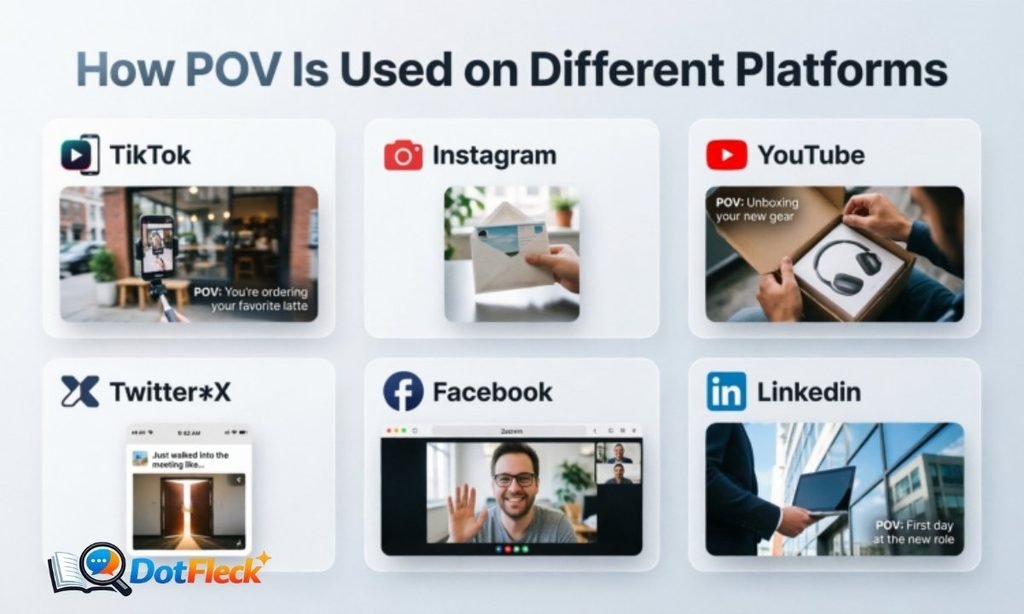
The core meaning stays the same everywhere, but the tone shifts depending on the app.
On TikTok
it’s used to set up short skits, roleplay scenarios, or relatable “you know this feeling” moments. It’s often paired with acting, music, or a specific trend format.
On Instagram
it tends to show up in captions under photos or Reels, often more aesthetic or emotional than comedic. Think travel photos captioned “POV: sunset in Santorini.”
On Twitter/X
it’s usually text-only and used for humor or commentary. Someone might tweet “POV: you’re the only one at the party who didn’t get the memo about costumes” without any video at all.
That last one matters because a lot of people assume POV only applies to video content. It doesn’t. It’s really just a storytelling shortcut that works in text, images, or video.
Read More : What Does LMAO Mean in Text
Real Examples
A TikTok caption: “POV: it’s 2am and you remember something embarrassing from 2016.”
An Instagram caption under a coffee shop photo: “POV: your Sunday morning finally feels calm.”
A tweet with no image at all: “POV: you’re explaining group chat drama to someone who wasn’t in the group chat.”
A comment on someone else’s post: “this is literally my life, the POV is too accurate.”
Notice how none of these need extra explanation. That’s the whole point of the format. It relies on shared experience instead of a full setup.
When to Use It and When to Skip It
This works best when the scenario is instantly relatable or specific enough to be funny. It falls flat when the situation is too vague or too personal to land with a wide audience.
A few quick guidelines:
- Use it for scenarios other people can picture themselves in
- Avoid it for something so niche only you would understand the reference
- Don’t overuse it in every caption, since it loses impact fast when it’s everywhere
- Skip it in formal writing or professional captions, since it reads as very casual
Common Mistakes People Make With This Term
One mistake that’s gotten more common lately is using “POV” when the content isn’t actually shown from anyone’s perspective at all. It’s just a third-person description with the word slapped on front. That’s a bit of a drift from the original usage, and some longtime users of the format find it annoying, even if it’s now common enough to be accepted.
Another mix-up is assuming it always needs video. As shown above, it works fine as plain text.
The last one is confusing the slang meaning with the government or insurance meaning. If you’re reading a travel reimbursement policy and see “POV,” it has nothing to do with TikTok trends.
Related and Similar Terms
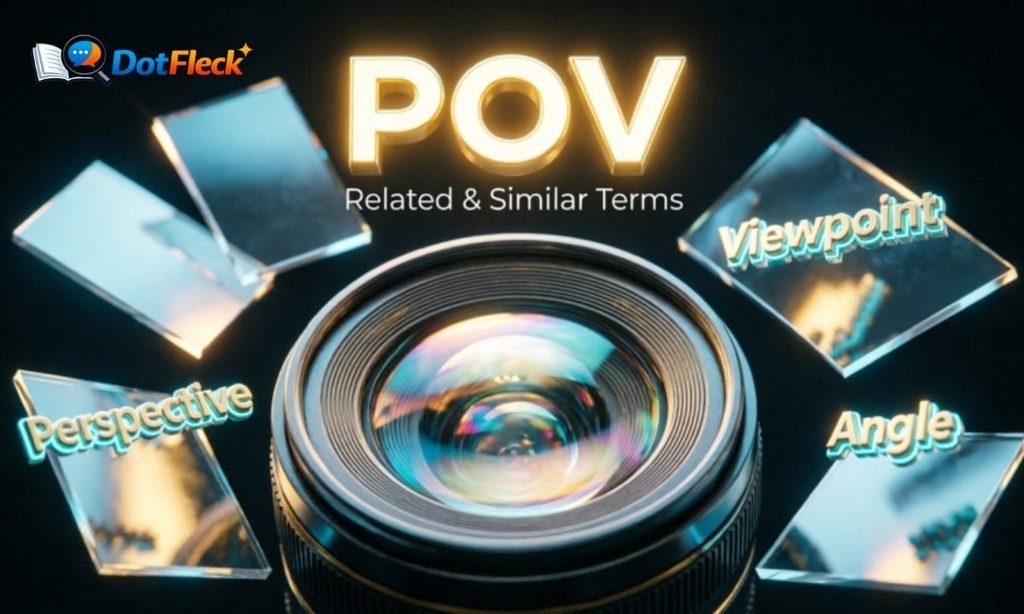
A few terms often show up alongside this one, and knowing them helps you understand the broader trend:
- First-person perspective: the general concept POV slang is built on
- Roleplay video: a common format that uses POV-style captions
- Relatable content: the broader category this type of post falls into
- Get ready with me (GRWM): a specific trend often paired with POV framing
- Caption trend: the general pattern of using a set phrase to launch a video idea
Frequently Asked Questions
What does POV mean in a text message?
It usually means “imagine this is happening to you” or “here’s my perspective on this.” Someone might text “POV: I just walked into my ex at the grocery store” to describe a real moment as if you’re experiencing it alongside them.
Is POV always used in videos?
No. It started with video content but is now used just as often in photo captions, tweets, and comments. The word works anywhere someone wants to frame a moment from a specific perspective.
Does POV mean something different on TikTok versus Instagram?
The core meaning is the same. TikTok tends to use it for skits and roleplay, while Instagram leans more toward aesthetic or emotional captions. The platform changes the tone, not the definition.
What does POV mean in a medical or government context?
In government and military paperwork, POV usually stands for “Privately Owned Vehicle,” often related to mileage or travel reimbursement. It has no connection to the social media slang term.
Why do people say the POV trend feels overused?
Because it’s been around for several years and gets applied to almost anything now, including posts that aren’t really shown from a specific viewpoint. Some users feel it’s lost some of its original punch, though it’s still widely used.
Is POV gendered, like a “girl version” versus a “guy version”?
Not in terms of actual meaning. Searches like these usually point to a specific viral video rather than a different definition. The phrase itself is used the same way regardless of who’s posting.
Bottom Line
At its core, this is a simple shortcut: point of view, borrowed from film language and repurposed for quick, relatable storytelling online. The scenario changes every time, but the goal stays the same, which is putting the reader or viewer directly into a moment instead of just describing it to them.
Just remember that context matters. On social media, it’s almost always the storytelling version. On a government form, it’s talking about your car.

Ethan Whitmore is an English language writer who enjoys making grammar, word meanings, and modern slang simple and easy to understand. His content focuses on clear explanations, practical examples, and everyday English usage.