
SYFM stands for “shut your f***ing mouth.” It’s a blunt, vulgar way of telling someone to stop talking, usually fired off in a heated text thread, a gaming lobby, or a comment section when someone is annoyed. Some people soften it to “shut your freaking mouth,” but the crude version is where the abbreviation started.
If you saw SYFM pop up in a DM or a TikTok comment and had no idea what it meant, you’re not the only one. Internet acronyms like this move fast, and they don’t come with a glossary.
Quick Answer
SYFM = “Shut Your F***ing Mouth” (sometimes softened to “Shut Your Freaking Mouth”)
- Tone: Aggressive, dismissive, sometimes joking depending on context
- Where it’s used: Texting, TikTok comments, Discord, gaming chat, X/Twitter replies
- How offensive is it: Moderately to highly, depending on who’s using it and how
- Safe for work or family group chats: No
What SYFM Really Means

At its core, SYFM is a rude way of saying “stop talking” or “be quiet.” It’s the internet slang cousin of older acronyms like STFU, and honestly, the two get used almost interchangeably by younger texters.
The phrase carries an edge of frustration. Someone uses it when they’ve heard enough, when a comment feels unwanted, or when they want to shut down an argument fast without typing out a full sentence.
Context changes everything with this one. Between close friends, SYFM can be a joke, almost a form of affectionate teasing. Between strangers or in a genuinely tense exchange, it reads as hostile and can escalate things quickly.
Read Also : What Does LMAO Mean in Text
Where the Term Came From
Nobody owns SYFM the way a brand owns a trademark, so pinning down an exact origin is tricky. Most slang trackers and forums point to it growing out of general texting shorthand from the 2000s and 2010s, back when SMS character limits pushed people to compress everything into acronyms.
It’s part of the same family as phrases like STFU and GTFO, just applied to a specific action: talking. As texting gave way to Discord servers, group chats, and comment sections, the abbreviation carried over and picked up new audiences, especially younger users on TikTok and Snapchat who use it as reaction slang rather than a literal command.
There’s no single viral post or creator credited with inventing it. It’s more of a natural mutation from older internet profanity acronyms than a coined term.
How SYFM Shows Up on Different Platforms
The meaning doesn’t change much across apps, but the tone does. A comment that reads as playful on TikTok can land very differently in a private text.
On TikTok and Instagram comments
Usually reactive and a bit performative. Someone posts something bold or funny, and a commenter drops SYFM as a way of saying “I can’t believe you said that” or “stop, you’re too much.”
In text messages and DMs
More personal, and it depends heavily on the relationship. Between friends who talk like this regularly, it’s low stakes. From someone you don’t know well, it can feel like an actual insult.
In gaming chat (Discord, Xbox, PS5 party chat)
Often thrown around during trash talk. Gamers use SYFM the way they’d use any competitive jab, more about bravado than genuine anger.
Read Slang : YN Meaning in Text
Real Conversation Examples
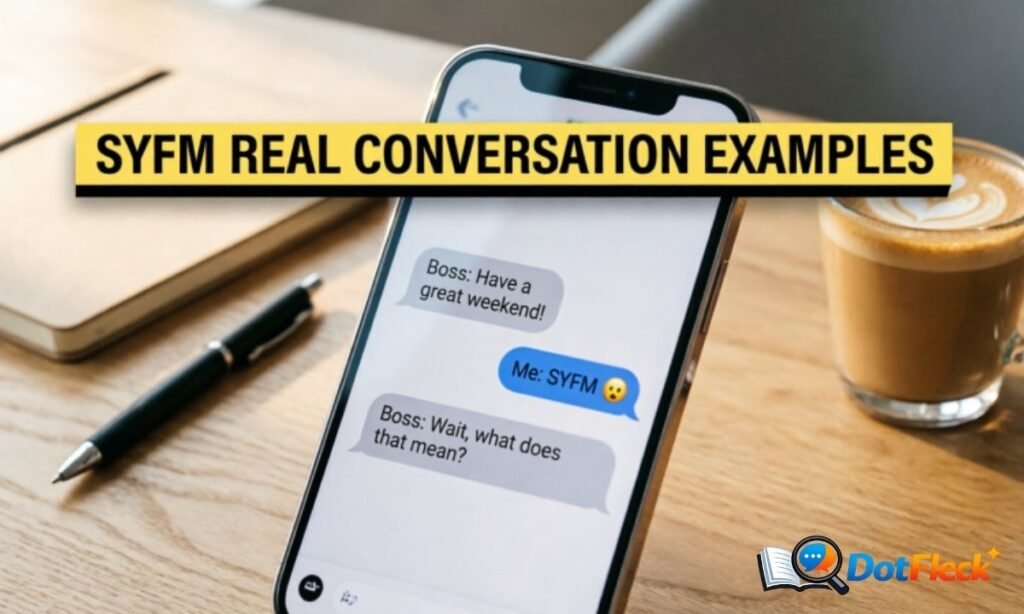
Here’s how the phrase actually shows up in the wild, across a few different tones.
Playful, between friends:
Friend: “You wore that shirt to the interview? Bold choice.” You: “syfm it’s a good shirt 😭”
Genuinely annoyed, in an argument:
Person A: “You always do this, you never listen.” Person B: “syfm you don’t even know what happened”
Gaming trash talk:
Teammate: “Bro how did you miss that shot, that was free.” You: “syfm I was lagging”
Notice how none of these look identical. Tone, punctuation, and even lowercase versus caps change how aggressive it reads. A lowercase “syfm 😭” with a laughing emoji rarely means the same thing as an all-caps “SYFM” with no punctuation at all.
Read More : PMO Meaning in Text
When It’s Fine to Use and When to Skip It
There’s a real line here, and it’s not just about formality.
Reasonably okay to use:
- Casual texting with close friends who already use similar language
- Gaming chat with people who expect trash talk
- Reacting to a funny or absurd post, softened with an emoji
Better to avoid:
- Work Slack, email, or any professional setting
- Messaging someone you don’t know well
- Family group chats, especially with parents, relatives, or younger kids present
- Any moment where the other person seems genuinely upset rather than joking
A good rule of thumb: if you’d feel weird explaining the acronym to the person’s face, don’t send it.
Mistakes People Make With SYFM
A few things trip people up, and most other guides on this topic skip them entirely.
One common mix-up is confusing SYFM with SYBAU (“shut your bitch ass up”), a similar but distinct insult acronym that’s been trending alongside it on TikTok. They’re related in spirit but not interchangeable, and using one when you mean the other can change how harsh the message lands.
Another mistake is assuming tone travels through text the way it does in person. What feels like a joke typed with a laughing emoji can read as flat-out rude without that context, especially to someone unfamiliar with how you communicate. If there’s any chance the other person might take it literally, it’s worth adding something that signals you’re kidding, or just not sending it at all.
People also sometimes use SYFM in comment sections aimed at strangers or public figures, forgetting that written insults carry more weight than spoken ones because they’re permanent and screenshot-able.
Similar Slang Worth Knowing
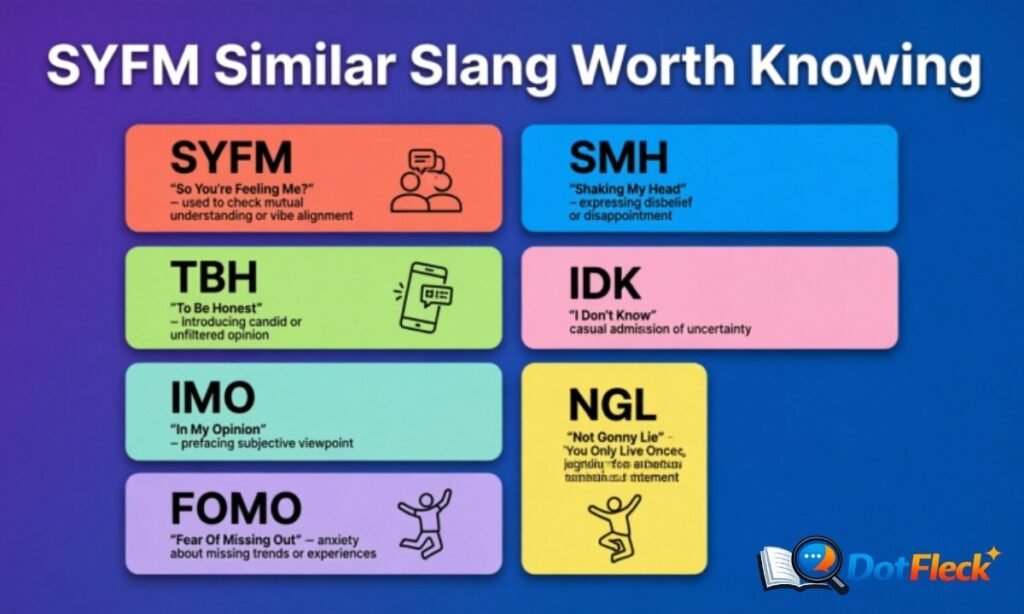
A handful of related acronyms tend to show up alongside SYFM, and knowing them helps make sense of the wider trend:
- STFU – “Shut the f*** up,” the older, more widespread version of the same sentiment
- SYBAU – “Shut your bitch ass up,” a harsher variant popular in TikTok comment culture
- GTFO – “Get the f*** out,” used to dismiss someone from a conversation entirely
- IDC – “I don’t care,” a milder way of shutting down a topic without profanity
- SMH – “Shaking my head,” expresses disapproval without telling someone to stop talking
Frequently Asked Questions
Is SYFM always meant as an insult?
Not always. Among friends, it’s often used jokingly to react to something funny, embarrassing, or over the top. The intent usually shows through tone, punctuation, and emojis rather than the letters themselves, so context matters more than the acronym.
What’s the difference between SYFM and STFU?
They mean almost the same thing. STFU is the older, more universally recognized acronym for “shut the f*** up,” while SYFM specifically targets someone’s mouth or speech and has gained more traction recently among younger social media users.
Is it okay to reply to SYFM with a joke?
Usually, yes, especially if the message came from a friend. A lighthearted response often diffuses any tension. If the tone felt genuinely hostile, though, it’s fine to just not engage or to ask directly what they meant.
Does SYFM mean the same thing on every app?
The core meaning stays the same, but the vibe shifts. On TikTok it often reads as reactive humor, while in a private message between two people arguing, it usually carries real frustration behind it.
Can SYFM be considered cyberbullying?
It can, depending on the situation. If it’s repeated, targeted at someone who’s upset, or sent by a stranger with intent to hurt, it crosses from casual slang into harassment territory. Context and repetition are what usually decide that line.
Bottom Line
SYFM is short for a vulgar phrase telling someone to stop talking, and while it can be tossed around playfully between friends, it’s still rooted in profanity and carries real weight depending on who sends it and why. Reading the room, or the chat thread, matters more than the four letters themselves.
Knowing what it means at least takes the confusion out of it the next time it shows up in your comments or your messages.

Ethan Whitmore is an English language writer who enjoys making grammar, word meanings, and modern slang simple and easy to understand. His content focuses on clear explanations, practical examples, and everyday English usage.