Should you write signup or sign up? The correct choice depends on how you use the word. Sign up is a verb that means to register or join something, while signup is a noun or modifier that refers to the registration process, form, or page. Sign-up is also a common noun and adjective spelling.
For example, write “I want to sign up for the newsletter,” but “The signup form takes one minute to complete.”
Although these forms look similar, each has a different grammatical role. This guide explains when to use signup, sign up, and sign-up, with practical examples, grammar rules, and answers to common spelling questions.
Quick Answer: Signup or Sign Up?
Use sign up when describing the action of registering, joining, or enrolling. Use signup or sign-up when referring to the registration process, form, page, or another related item.
Here is the difference at a glance:
- Sign up: Verb — “Please sign up for the course.”
- Signup: Noun or modifier — “Complete the signup form.”
- Sign-up: Hyphenated noun or adjective — “The sign-up sheet is on the desk.”
A simple test can help you choose the right spelling. If the phrase describes something someone does, use “sign up.” If it names or describes a thing, use “signup” or “sign-up,” depending on your preferred style.
What Does Sign Up Mean?
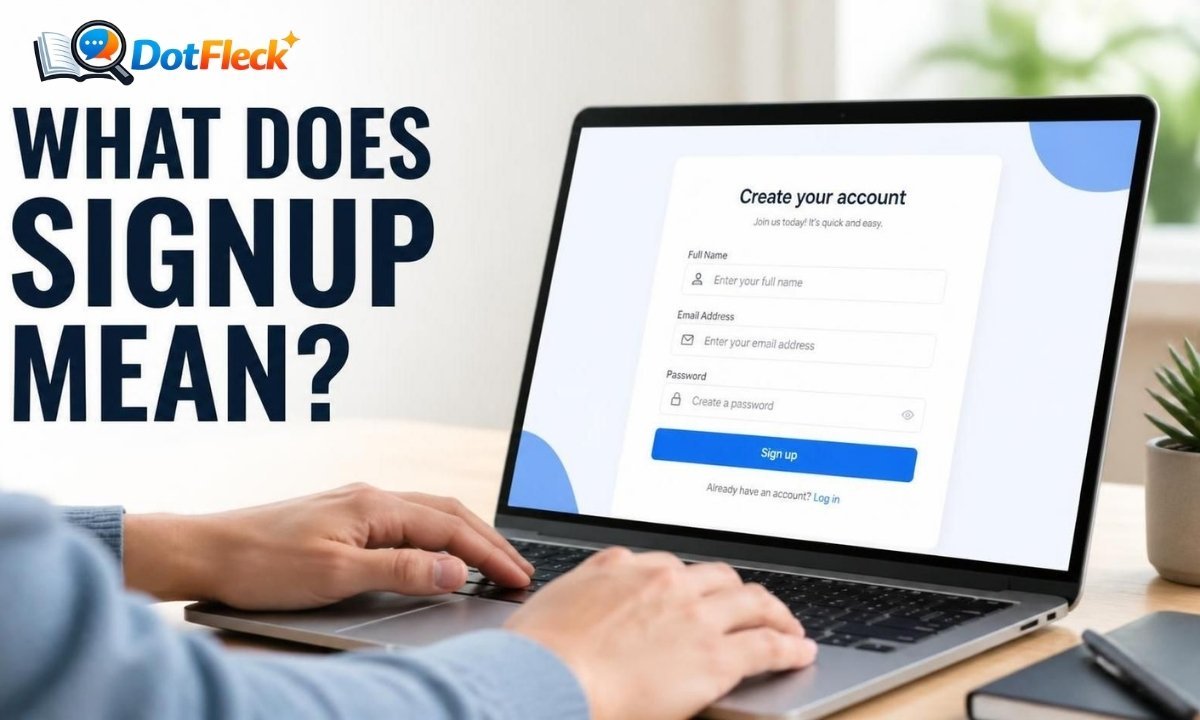
Sign up is a phrasal verb that means to register, enroll, join, or agree to participate in something. It usually describes an action rather than an object.
For example:
- I plan to sign up for a cooking class.
- She signed up for the free newsletter.
- They are signing up for the school trip.
- Have you signed up for the webinar yet?
- You can sign up online in a few minutes.
The verb changes according to tense, but the two words remain separate.
| Verb form | Example |
| Base form: sign up | I will sign up tomorrow. |
| Third-person singular: signs up | He signs up every year. |
| Past tense: signed up | We signed up yesterday. |
| Past participle: signed up | She has signed up already. |
| Present participle: signing up | They are signing up now. |
You can also place an object between “sign” and “up.” For example, “My mother signed me up for swimming lessons.” This is another reason to keep the verb as two words.
What Does Signup Mean?
Signup is a closed compound commonly used as a noun or as a modifier before another noun. It refers to registration or something associated with the registration process.
Examples include:
- The signup takes less than a minute.
- I never received my signup confirmation email.
- The website has a simple signup process.
- Our newsletter signup attracted new subscribers.
- The signup page asks for an email address.
In each example, “signup” refers to a thing, process, or feature rather than the action someone performs.
In digital products and website design, the one-word spelling is especially common in labels, URLs, and product terminology. However, formal writing may favor the hyphenated form “sign-up.” Follow your publication’s or organization’s style guide.
Is Sign-Up Correct?
Yes. Sign-up is a correct hyphenated form used as a noun or adjective.
For example:
- The sign-up sheet is on the front desk.
- The sign-up deadline is Friday.
- Please check the sign-up list.
- We created a sign-up page for new members.
The hyphen connects the words when they function together as a noun or modifier. Some dictionaries and style guides prefer “sign-up,” while many technology companies use “signup.”
Both styles are widely understood. The important thing is to choose one that suits your audience and apply it consistently.
Remember that the verb does not take a hyphen. Write “I need to sign up,” not “I need to sign-up.”
Key Differences Between Signup or Sign Up, and Sign-Up
The main difference is grammatical function. “Sign up” describes an action, whereas “signup” and “sign-up” name or describe something related to registration.
| Spelling | Part of speech | Correct example |
| Sign up | Verb | I want to sign up today. |
| Signup | Noun | The signup was successful. |
| Signup | Modifier | Open the signup page. |
| Sign-up | Noun | The sign-up is open to everyone. |
| Sign-up | Adjective | Complete the sign-up form. |
Compare these two sentences:
“I will sign up for the service tonight.”
“The signup process takes only a few minutes.”
The first sentence describes an action. The second identifies a process. Recognizing that difference makes the correct spelling easier to remember.
Signups or Sign-Ups: Which Is Correct?
Both signups and sign-ups are acceptable plural forms. The correct choice depends on whether you use “signup” or “sign-up” as your noun.
Examples:
- We received 200 signups after launching the website.
- The event organizers counted 75 sign-ups.
- All new signups will receive a confirmation email.
- The volunteer sign-ups close at noon.
Avoid writing “sign ups” when you mean the plural noun. In that construction, the two-word form is normally read as a verb phrase rather than a single noun.
For consistency, use “signups” throughout a document if you have chosen the closed compound, or use “sign-ups” if your style guide prefers the hyphen.
Signup or Sign Up for Gmail?
Use sign up for Gmail when describing the action of creating an account. Use “signup” or “sign-up” when referring to the registration page or process.
Examples:
- I want to sign up for Gmail.
- The Gmail signup page asks for your personal details.
- Follow the instructions to sign up for a Google Account.
- The sign-up process requires a few basic steps.
The distinction is grammatical, not specific to Gmail. The same rule applies to newsletters, online services, applications, and other account-registration processes.
Signup or Sign Up Online?
When discussing online registration, choose the spelling based on the role the phrase plays in your sentence.
Use “sign up” for instructions and calls to action:
- Sign up online to join the workshop.
- You can sign up for the newsletter on our website.
- Sign up today to receive event updates.
Use “signup” or “sign-up” when naming a feature or process:
- Visit our signup page.
- The sign-up form is easy to complete.
- Our website has a new signup feature.
Website addresses may use a path such as /signup. This is a technical naming convention, not a change to the grammar rule.
| Don’t Miss These Grammar Articles |
| Swifty or Swiftie: Which Spelling Is Correct? (2026) |
| Curtesy or Courtesy (2026): Which Spelling Is Correct? |
SignUpGenius: Brand Name or Grammar Rule?
SignUpGenius is a brand name, so its official capitalization should be preserved when referring to the service.
For example:
- Volunteers can sign up through SignUpGenius.
- We used SignUpGenius to organize the event.
- The sign-up sheet lists every volunteer.
Notice that the brand name remains unchanged, while the surrounding words follow standard grammar rules. The capitalization of a company’s name does not determine how the same words should be written in ordinary sentences.
Signup vs. Sign In vs. Log In
“Sign up” means to register for something or create an account. “Sign in” and “log in” mean to access an existing account.
Compare the examples:
- Sign up: Create a new account.
- Sign in: Access an account you already have.
- Log in: Enter an existing account.
The noun forms are different from the verb forms:
- Please sign in to your account.
- Use your login details to access the website.
- The sign-in process requires a password.
- New customers can sign up for an account.
In website interfaces, use clear and consistent labels so visitors understand whether they are creating an account or accessing one.
Should a Button Say Signup or Sign Up?
For most website buttons, Sign Up is the clearer choice because it tells users what action to take.
Examples of effective button labels include:
- Sign Up
- Sign Up Free
- Sign Up for Updates
- Create an Account
Use “signup” or “sign-up” when describing the feature itself, such as a signup page or sign-up form.
For example, a page might have the heading “Newsletter Signup” and a button labeled “Sign Up.” The heading names the feature, while the button asks the visitor to act.
A brand may choose a different interface convention, but consistency and clarity should guide the decision.
Common Signup or Sign Up Mistakes
Here are some frequent mistakes and their corrections.
| Incorrect | Correct | Why |
| Please signup today. | Please sign up today. | The phrase is a verb. |
| I will sign-up tomorrow. | I will sign up tomorrow. | The verb has no hyphen. |
| Check the sign up sheet. | Check the sign-up sheet or signup sheet. | The phrase names a thing. |
| We received 100 sign ups. | We received 100 signups or sign-ups. | The noun should be joined or hyphenated. |
| She signuped yesterday. | She signed up yesterday. | The verb changes to “signed up.” |
The easiest way to avoid these errors is to identify the word’s role before choosing its spelling. Ask whether you are describing an action or naming something associated with registration.
Tips to Remember the Difference
Use these simple rules whenever you are unsure about signup or sign up.
- Use two words for the action. Write “I will sign up for the class.”
- Use one word or a hyphen for the noun. Write “The signup is complete” or “The sign-up is complete.”
- Keep the verb’s tense changes separate. Write “signed up,” “signs up,” and “signing up.”
- Check the sentence structure. If you can replace the phrase with “register,” you probably need the verb “sign up.”
- Follow one style consistently. Avoid switching between “signup” and “sign-up” without a reason.
For example, “I signed up for the event” describes an action, while “My event signup is confirmed” describes the registration.
Is Sign Up Hyphenated?
No. Sign up is written as two words when it functions as a verb. The hyphenated spelling “sign-up” is used as a noun or adjective.
Correct examples:
- I will sign up for the course.
- She signed up yesterday.
- The sign-up sheet is on the table.
- The signup page is available online.
The choice between “signup” and “sign-up” for a noun or modifier often depends on the dictionary or style guide being followed. It is not simply an American-versus-British English distinction.
Synonyms for Sign Up

Depending on the context, you can replace “sign up” with several related expressions.
| Alternative | Best use |
| Register | Events, websites, and services |
| Enroll | Classes, schools, and programs |
| Join | Clubs, groups, and communities |
| Subscribe | Newsletters and paid content |
| Apply | Jobs, programs, and opportunities |
| Opt in | Voluntary communications or services |
For example, “Register for the webinar” and “Sign up for the webinar” communicate a similar action. However, these alternatives are not interchangeable in every context. Choose the word that accurately describes what the person is doing.
Summary: Signup or Sign Up?
The difference between signup or sign up comes down to grammar:
- Sign up is the verb meaning to register, join, or enroll.
- Signup is a noun or modifier commonly used in digital and informal contexts.
- Sign-up is a hyphenated noun or adjective used by many dictionaries and style guides.
- Signups and sign-ups are both correct plural nouns.
When in doubt, identify whether the phrase describes an action or names a thing. Use “sign up” for the action, then choose “signup” or “sign-up” for the noun or modifier according to your preferred style.
Frequently Asked Questions
Is it signup or sign up?
Both are correct in different contexts. Use “sign up” as a verb and “signup” as a noun or modifier. For example, “I want to sign up” and “The signup page is ready.”
Is signup one word or two?
“Signup” is one word when used as a noun or modifier. “Sign up” is two words when used as a verb. The hyphenated form “sign-up” is also common for nouns and adjectives.
Is sign-up with a hyphen correct?
Yes. “Sign-up” is correct when used as a noun or adjective, as in “sign-up sheet.” Do not hyphenate the verb: write “Please sign up.”
What is the plural of signup?
The plural of “signup” is “signups.” If you use the hyphenated noun “sign-up,” its plural is “sign-ups.”
Should a button say sign up or signup?
“Sign Up” is generally clearer on a button because it describes an action. Use “signup” or “sign-up” when naming the page, process, or form.
Is it sign up for Gmail or signup for Gmail?
Write “sign up for Gmail” when describing the action of registering. Use “Gmail signup page” or “Gmail sign-up page” when referring to the registration page.
What is the difference between sign up and sign in?
“Sign up” means registering for a service or creating an account. “Sign in” means accessing an account that already exists.
Is signup or sign-up better in formal writing?
Both are understood, but “sign-up” is preferred by some dictionaries and editorial style guides for nouns and adjectives. Check your publication’s style guide and use the same form consistently.

Ethan Whitmore is an English language writer who enjoys making grammar, word meanings, and modern slang simple and easy to understand. His content focuses on clear explanations, practical examples, and everyday English usage.