If someone texts you “I’m feeling emo” or says “Why are you so emo?”, you might wonder what they actually mean. Are they saying they are sad? Are they talking about music? Is it about fashion or personality?
The answer depends on the context.
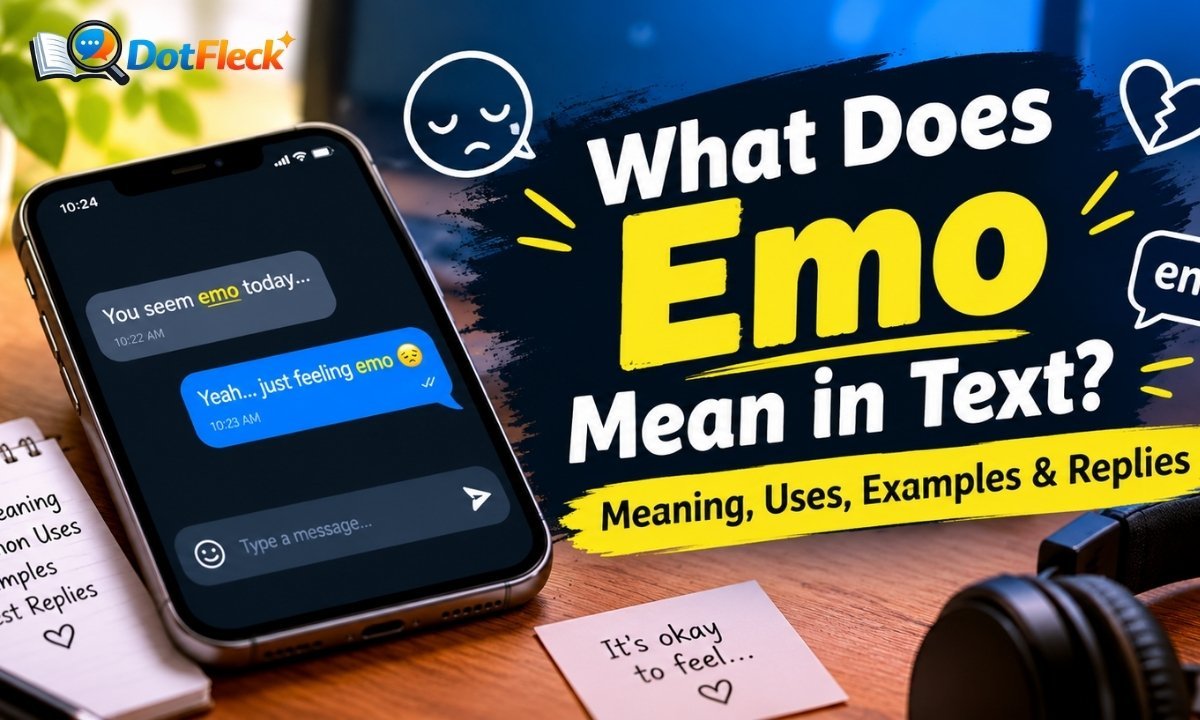
In texting and social media, “emo” is an informal word that can describe someone who seems emotional, sentimental, sensitive, or sad. It can also refer to the emo music scene, fashion style, aesthetic, or broader subculture. Unlike common texting abbreviations such as “LOL” or “BRB,” emo usually isn’t an acronym with a standard full form.
Quick Answer
“Emo” in text usually means emotional, sentimental, sensitive, or somewhat sad. It can also refer to emo music, fashion, an aesthetic, or the emo subculture.
The word is informal and its meaning can change depending on the conversation. It isn’t normally a texting acronym or abbreviation with a fixed “full form.”
What Does Emo Mean in Text?
When people use emo in casual texts, they generally use it as a descriptive word rather than as an abbreviation.
Depending on the situation, it can describe:
- A person’s current mood
- Someone acting unusually emotional
- A sentimental or nostalgic reaction
- Emo music
- Emo fashion
- An alternative aesthetic
- A person connected with the emo subculture
Consider these two examples:
“I’m so emo tonight.”
This probably means the person is feeling emotional, sentimental, or a little sad.
Now compare it with:
“I’ve been listening to emo all day.”
Here, emo refers to a style or category of music.
This difference is important because emo doesn’t have one meaning in every conversation.
Is “Emo” Short for “Emotional”?
The word is closely associated with emotional, especially in casual modern usage, but it isn’t simply a universal shortened form of the word.
Historically, emo became associated with emotionally expressive rock music and later developed into a broader music and youth subculture. Over time, everyday internet and texting language expanded the word’s use.
As a result, emo can suggest emotional behavior while also carrying musical, fashion, or cultural associations.
What Does Emo Mean When Someone Says “I’m Emo”?
When someone texts:
“I’m emo.”
they are often saying something like:
- “I’m feeling emotional.”
- “I’m feeling a little sad.”
- “I’m feeling sentimental.”
- “I’m in my feelings.”
- “Something has affected me emotionally.”
However, the exact meaning depends on what was discussed before the message.
For example:
Friend: “I just found our old school pictures.”
You: “Aww, I’m emo now 😭.”
Here, emo means the pictures triggered nostalgia or strong emotions.
On the other hand:
Friend: “What kind of music do you listen to?”
You: “Mostly emo.”
In this conversation, emo refers to music rather than mood.
| Don’t Miss These Posts |
| Best Synonyms for Community: 40+ Words and Alternatives for 2026 |
| Bite Past Tense: Easy Guide to Bite, Bit, and Bitten |
Different Emo Meanings of in Text
The easiest way to understand the word is to separate its most common uses.
1. Emo Means Emotional
This is one of the most common casual uses.
Someone may write:
“Why am I so emo today?”
They probably mean they are feeling unusually emotional or sensitive.
It doesn’t necessarily mean something serious has happened. People often use the word casually when they are reacting strongly to a movie, song, memory, relationship, or personal situation.
2. Emo Means Sad or Sentimental
Sometimes emo is used to describe a temporary sad or sentimental mood.
For example:
“That ending made me emo.”
The person isn’t necessarily identifying themselves with an entire subculture. They’re simply saying that the ending made them emotional.
Another example:
“Missing my friends tonight. Feeling emo.”
Here, the word communicates sadness or nostalgia in a casual way.
3. Emo Refers to Music
Emo is also strongly associated with a style and scene within alternative rock music.
Someone might say:
“I grew up listening to emo.”
or:
“I need an emo playlist.”
In these examples, the word isn’t describing a person’s mood. It refers to music.
This is one reason context matters so much when interpreting the word.
4. Emo Refers to Fashion
The word can also describe a particular appearance or fashion aesthetic.
For example:
“That outfit is so emo.”
The speaker may be commenting on an alternative look involving elements such as dark clothing, distinctive hairstyles, accessories, makeup, or other visual choices associated with emo culture.
However, not every person who wears dark clothing or alternative fashion should automatically be described as emo. The label can have different meanings to different people.
5. Emo Refers to an Aesthetic
Online, emo is sometimes used more broadly to describe the overall visual feeling of a photo, video, profile, room, playlist, or outfit.
Someone might write:
“This whole photo set has an emo vibe.”
Here, the word describes an aesthetic rather than a specific emotional condition.
6. Emo Can Describe Someone’s Behavior
A friend might jokingly tell you:
“You’re being so emo today 😂.”
They could mean you’re being unusually emotional, sensitive, dramatic, nostalgic, or serious.
Whether this sounds funny or insulting depends heavily on the relationship between the people involved.
What Does Emo Mean From a Girl?
There is no separate standard meaning of “emo” when a girl uses it.
A girl might use the word to describe:
- Her own emotional mood
- Someone else’s behavior
- Music she enjoys
- A fashion style
- An aesthetic
- A sentimental reaction
For example:
“I’m getting emo listening to this song.”
This most likely means the song is making her emotional.
But:
“I love emo bands.”
is clearly about music.
And:
“Your outfit looks emo.”
is about appearance or style.
The sender’s gender doesn’t determine the meaning. The surrounding conversation does.
What Does Emo Mean From a Guy?
The same basic rule applies when a guy uses the word.
For example:
“Bro, I’m feeling emo tonight.”
This probably describes his emotional state.
But:
“I’ve been listening to emo since high school.”
is about music.
And:
“That jacket is kinda emo.”
is describing an aesthetic or style.
Therefore, there isn’t a special “guy meaning” for emo. Look at the words around it and the subject of the conversation.
How Is “Emo” Used on Social Media?
The meaning of emo can shift slightly depending on the type of content being discussed.
Emo Meaning on TikTok
On TikTok, emo can describe music, fashion, nostalgia, humor, identity, or an alternative aesthetic.
A caption might say:
“My emo phase is coming back.”
This could be humorous, nostalgic, or a genuine reference to the person’s style and interests.
Emo Meaning on Instagram
On Instagram, emo is often used when discussing photographs, outfits, hairstyles, playlists, or visual aesthetics.
For example:
“This picture is giving emo vibes.”
The speaker is probably describing the visual mood of the photograph.
Emo Meaning on Snapchat
Snapchat users may use emo casually when talking about their mood or joking about a friend’s appearance.
“Why does this snap look so emo 😭?”
The exact meaning depends on the image and previous conversation.
Emo Meaning on Discord
On Discord, the word may appear in gaming, music, social, or alternative-interest communities.
It could refer to someone’s avatar, music preferences, appearance, personality, or mood.
Emo Meaning on Dating Apps
On dating profiles, emo often relates to interests or aesthetics.
For example:
“Looking for someone who loves emo music.”
This doesn’t mean the person is constantly sad. It simply tells you something about their musical interests.
What Does Emo Mean in Different Contexts?
Here’s a quick breakdown:
| Context | Likely Meaning |
| “I’m feeling emo” | Emotional, sentimental, or somewhat sad |
| “That song makes me emo” | The song triggers strong emotions |
| “I love emo music” | A music style/scene |
| “That’s an emo outfit” | Alternative fashion style |
| “You look emo” | Appearance or aesthetic |
| “Why are you being emo?” | Teasing someone for being emotional |
| “My emo phase is back” | Returning to an emo-associated style or interest |
| “I need an emo playlist” | Wants emotionally expressive or emo-associated music |
| “This picture is so emo” | The image has an emo-like aesthetic or mood |
What Tone Does “Emo” Have?
One reason the word can be confusing is that tone matters.
The same word can be affectionate in one conversation and insulting in another.
Casual
“I’m feeling emo today.”
The speaker is simply describing their mood.
Playful
“Bro, you’re getting emo 😂.”
A friend may be teasing you.
Teasing
“Why are you so emo over one movie?”
This can be playful, but it could also sound dismissive.
Complimentary
“I love your emo aesthetic.”
Here, the word may be positive.
Self-Descriptive
“I’ve always been into emo music.”
The speaker is describing their interests.
Negative
“He’s acting emo again.”
Depending on tone, this could be intended as criticism.
Therefore, “emo” isn’t automatically positive or negative. The surrounding conversation and relationship between the speakers provide the missing context.
Is “Emo” a Bad Word?
No. “Emo” is not inherently a swear word or offensive term.
However, the way it is used can make it sound dismissive or insulting.
For example:
“I’m feeling emo today.”
is generally harmless.
But:
“Stop being so emo.”
could sound rude if the person is genuinely upset.
It is especially important to consider context when someone is discussing serious emotions. If a person is clearly struggling, reducing their feelings to “being emo” may make them feel dismissed.
In casual conversations among friends, however, the term is often used jokingly.
Is Emo the Same as Sad?
Not exactly.
Sad has a more direct meaning: it describes an unhappy emotional state.
Emo is broader and more informal.
Someone who is emo in a particular text could be:
- Sad
- Sentimental
- Nostalgic
- Sensitive
- Emotional
- Interested in emo music
- Interested in an emo aesthetic
For example:
“I’m sad because I miss my family.”
This directly describes sadness.
But:
“I’m getting emo thinking about my family.”
could communicate sadness, nostalgia, affection, or a mixture of emotions.
So while emo and sad can overlap, they are not interchangeable in every situation.
Emo vs. Emotional
The two words are related, but they aren’t identical.
Emotional is a standard English adjective.
“The movie was emotional.”
Emo is much more informal and carries additional cultural associations.
“That movie made me emo.”
The second sentence sounds more casual and may suggest that the speaker became sentimental or emotionally affected.
It may also carry a playful tone that emotional doesn’t necessarily have.
Emo vs. Moody
Moody describes someone whose mood changes or who is often in a negative or unpredictable mood.
“He’s been moody all morning.”
Emo, on the other hand, can suggest emotional sensitivity or sadness, but it can also refer to music, fashion, or culture.
Therefore:
- Moody → focuses on mood or behavior
- Emo → can focus on emotion, style, music, or culture
Emo vs. Sensitive
Sensitive usually describes someone who is easily affected emotionally.
“She’s very sensitive about criticism.”
Emo can sometimes communicate a similar idea, but it is more informal and can be playful or teasing.
Someone can be sensitive without being described as emo.
Emo vs. Dramatic
Calling someone dramatic usually suggests that they are reacting strongly or excessively.
“You’re being dramatic.”
Calling someone emo can suggest that they are emotional or sentimental, but it doesn’t necessarily mean they are exaggerating.
The two words can overlap in teasing conversations, but they aren’t exact synonyms.
Common Examples of “Emo” in Text
Here are some realistic examples showing how the meaning changes with context.
Example 1
“I’m feeling kinda emo tonight.”
Meaning: The person feels emotional, sentimental, or somewhat sad.
Example 2
“Why are you getting so emo over that movie? 😂”
Meaning: The sender is teasing someone for becoming emotional.
Example 3
“This song always makes me emo.”
Meaning: The song triggers strong emotions.
Example 4
“Your haircut is giving emo vibes.”
Meaning: The haircut has an emo-associated aesthetic.
Example 5
“I’ve been listening to emo all afternoon.”
Meaning: The person is talking about music.
Example 6
“Okay, don’t get emo on me now 😭.”
Meaning: Playful teasing about someone’s emotions.
Example 7
“That old photo made me so emo.”
Meaning: The photo triggered nostalgia or strong feelings.
Example 8
“She has such an amazing emo aesthetic.”
Meaning: The speaker likes her alternative visual style.
Example 9
“I didn’t expect that ending. Now I’m emo.”
Meaning: The ending made the person emotional.
Example 10
“Are you actually upset or just being emo?”
Meaning: The sender is distinguishing genuine sadness from playful emotional behavior.
Example 11
“I need an emo playlist tonight.”
Meaning: The person wants music associated with an emotional or emo mood.
Example 12
“Miss you already. Getting a little emo 🥲.”
Meaning: The person is expressing affectionate sadness or sentimentality.
How to Respond When Someone Says “Emo”
Your response should depend on what the sender means.
If They’re Clearly Emotional
You could say:
“What happened?”
or:
“You okay?”
This gives them an opportunity to explain.
If They’re Joking
A playful response might be:
“Haha, leave me alone 😂.”
If They’re Talking About Music
You could respond:
“Which emo bands do you listen to?”
This keeps the conversation focused on music.
If They’re Talking About Your Style
You might say:
“Haha, is that a compliment?”
This gives the sender an opportunity to clarify.
If You Don’t Understand
Simply ask:
“What do you mean by emo?”
That’s often the easiest way to avoid misunderstanding.
If the Conversation Is Romantic
If your partner says:
“I’m getting emo because I miss you.”
you could reply:
“Aww, I miss you too ❤️.”
The appropriate response depends on the relationship and tone of the conversation.
How to Tell Which Meaning Someone Intended
When you’re unsure about the meaning of emo, don’t focus on the word alone. Look at the surrounding clues.
1. Read the Previous Messages
What were you talking about before they used the word?
If the conversation was about music, emo probably relates to music.
If you were discussing an emotional movie, it may describe their reaction.
2. Look at the Emojis
Emojis can provide useful context.
For example:
“I’m so emo 😭”
probably describes an emotional or sad mood.
But:
“That outfit is emo 🖤”
may be describing style or aesthetic.
3. Consider the Relationship
Friends may use emo as playful teasing.
A stranger using the same phrase could sound more judgmental.
4. Look for Music or Fashion Words
Words such as:
- Band
- Playlist
- Song
- Album
- Outfit
- Hair
- Makeup
- Aesthetic
- Style
can indicate that emo refers to music or appearance rather than someone’s mood.
5. Check Whether They Say “I’m Emo”
When someone says “I’m emo,” it often describes their current emotional state, but it can also be a statement about their identity or connection with the emo scene.
Again, context matters.
Is “Emo” an Acronym?
Usually, no.
Unlike texting abbreviations such as:
- LOL
- BRB
- IDK
- TBH
- BTW
emo generally isn’t used as an acronym where each letter represents a separate word.
It is a standalone term with roots in music and its association with emotional expression.
That’s why looking for a standard “full form” of EMO can be misleading.
Does Capitalization Change the Meaning?
Usually, no.
You may see:
- emo
- Emo
- EMO
In ordinary texting, capitalization generally doesn’t change the basic meaning.
The context still matters more than capitalization.
Emo vs. Emoji: Are They the Same?
No.
Although the words look similar, emo and emoji mean completely different things.
Emo is a word used to describe emotion, music, style, or subculture.
Emoji refers to pictorial symbols such as:
- 😂
- ❤️
- 😭
- 😎
- 🥲
For example:
“I’m feeling emo 😭.”
Here, emo is the word, while 😭 is the emoji helping communicate the tone.
When Should You Avoid Using “Emo”?
Although emo is common in casual conversations, it isn’t always appropriate.
In a professional email, for example:
“Why are you so emo about this?”
would generally sound too informal.
It can also be inappropriate when someone is genuinely experiencing serious emotional distress. Calling someone “emo” as a way of dismissing their feelings may make the situation worse.
If someone appears genuinely upset, it’s usually better to respond to what they’re saying rather than label their mood.
For example:
“You seem upset. Do you want to talk?”
is clearer and more supportive than:
“You’re being emo.”
Frequently Asked Questions About Emo Meaning
Does “emo” mean emotional in text?
Often, yes. In casual texting, emo can describe someone who is feeling emotional, sentimental, or somewhat sad. However, it can also refer to emo music, fashion, aesthetics, or the broader subculture.
What does “I’m emo” mean?
“I’m emo” often means “I’m feeling emotional” or “I’m in my feelings.” Depending on context, it may also refer to someone’s connection with emo music or culture.
Is “emo” a bad word?
No. Emo isn’t inherently offensive or vulgar. However, using it to mock someone’s emotions or appearance can make it sound insulting.
Is emo the same as sad?
No. Sad directly describes an unhappy emotional state, while emo has a broader informal meaning. It can describe emotions, music, fashion, aesthetics, or cultural identity.
What does “emo” mean from a girl?
There is no special meaning based on gender. A girl may use emo to describe her mood, music taste, fashion, aesthetic, or someone else’s behavior.
What does “emo” mean from a guy?
The basic meanings are the same. A guy may use emo to describe his emotional state, music preferences, appearance, or someone else’s behavior.
Is “emo” an abbreviation?
Not in the usual texting sense. Although the term is closely associated with emotional, it also has a well-established connection to music and subculture.
Can “emo” be a compliment?
Yes. Someone might compliment another person’s emo aesthetic, outfit, hairstyle, music taste, or overall style.
Can “emo” be an insult?
It can be used negatively depending on tone and context. For example, telling someone to “stop being emo” while they’re genuinely upset may sound dismissive.
What is the difference between emo and emotional?
Emotional is a standard adjective describing strong feelings. Emo is more informal and can also carry associations with music, fashion, aesthetics, and subculture.
Final Takeaway
So, what does emo mean in text?
Most commonly, emo is an informal way to describe someone who is emotional, sentimental, sensitive, or somewhat sad. But that’s only one part of the word’s meaning.
It can also refer to:
- Emo music
- Emo fashion
- An emo aesthetic
- Alternative culture
- A nostalgic or sentimental mood
- Someone’s emotional behavior
The best way to understand the word is to consider the entire conversation rather than the word by itself.
If someone says, “I’m feeling emo,” they’re probably talking about their mood. If they say, “I love emo music,” they’re talking about music. And if they say, “That outfit is so emo,” they’re most likely describing an aesthetic.
In short, “emo” doesn’t have one fixed meaning in texting. Context, tone, emojis, and the topic of conversation usually reveal what the sender means.

Ethan Whitmore is an English language writer who enjoys making grammar, word meanings, and modern slang simple and easy to understand. His content focuses on clear explanations, practical examples, and everyday English usage.