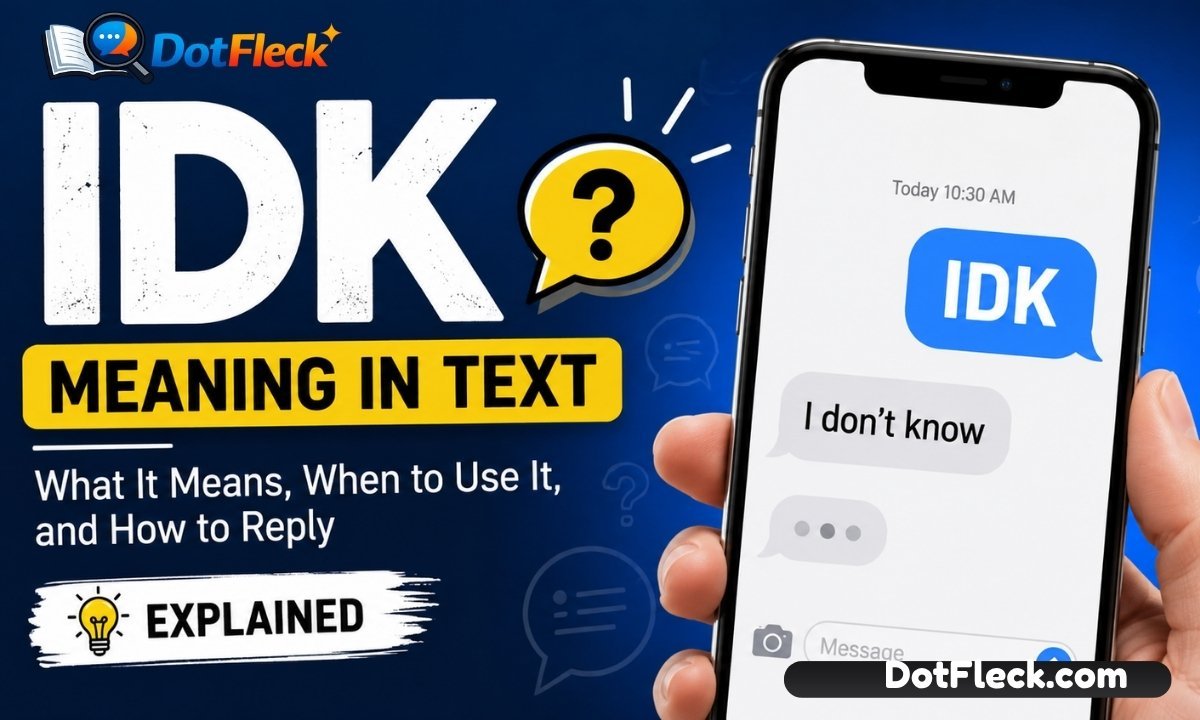
IDK means “I don’t know.” It’s one of the most common abbreviations in texting, used when someone genuinely doesn’t have an answer, wants to avoid committing to one, or just needs a quick, low-effort reply. You’ll see it in casual chats, group texts, and comments across nearly every social platform.
That’s the short version. But the way IDK gets used, and what it actually signals about the person typing it, changes a lot depending on who’s saying it and where.
Quick Answer
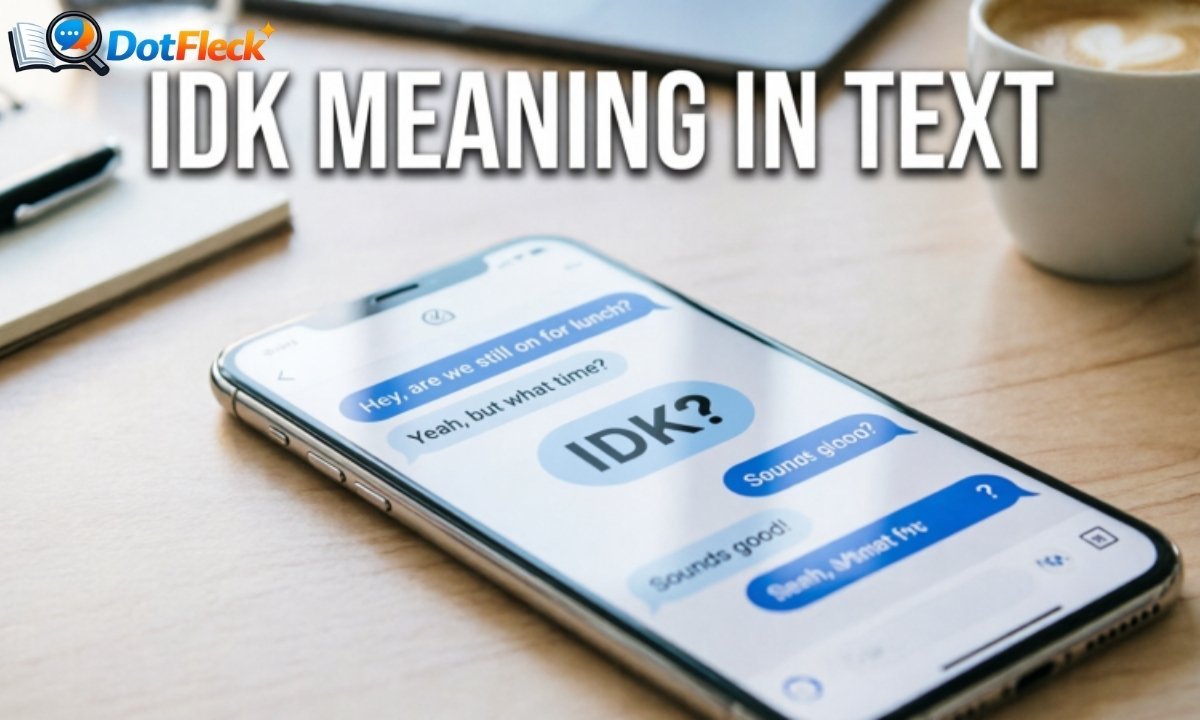
IDK = “I don’t know”
- Used in texting, DMs, comments, and casual chat
- Can mean genuine uncertainty, indecision, or a way to dodge a question
- Tone depends heavily on context, punctuation, and who sent it
- Common cousins: IDC, IDGAF, TBH, IMO
What IDK Actually Communicates
On the surface, IDK looks simple. Someone asks a question, you don’t have an answer, you type three letters instead of typing out the whole phrase. Efficient, right?
But in real conversations, IDK rarely stays that literal. It often carries an emotional undertone the words alone don’t show.
Say a friend texts “wanna get food later?” and you reply “idk.” That’s not really about not knowing your schedule. It usually means you’re not sure yet, you’re waiting to see other plans, or you just don’t feel like committing right now.
Compare that to a text like “idk, I think I messed up today.” Here it’s doing something different. It’s softening a confession, easing into a topic the person isn’t fully comfortable bringing up directly.
This is the part most explainers skip. IDK isn’t one meaning with a hundred use cases. It’s a flexible filler that borrows its tone from everything around it.
IDK From a Girl

When a girl texts IDK, context usually matters more than the word itself.
If it’s a reply to a plan or invitation, it can mean genuine hesitation, or that she’s leaving the door open without fully agreeing. In flirty or back-and-forth texting, IDK sometimes shows up as a playful deflection, especially after a question that feels a little personal.
A short, dry “idk” with no follow-up can be read as disinterested. A longer message that starts with “idk, maybe…” usually signals she’s actually thinking it through, not brushing you off.
IDK From a Guy
Guys tend to use IDK a bit more bluntly, often as a genuine shrug rather than a hint at something deeper.
In casual texting between friends, it’s frequently just filler, a placeholder while he figures out what he actually wants to say next. In dating conversations, though, an “idk” after a direct question (like about feelings or plans) can be a soft way of avoiding commitment without outright saying no.
The pattern to watch isn’t the word itself. It’s whether the reply comes with more explanation or just sits there alone.
IDK in Medical or Clinical Contexts
Outside of casual chat, IDK occasionally shows up in medical shorthand, though it means something entirely different there. In some clinical notes or lab contexts, IDK can stand for terms unrelated to texting slang, such as certain diagnostic abbreviations used internally by healthcare staff.
This use is rare in everyday conversation and almost never what someone searching “IDK meaning in text” is actually asking about. If you see IDK in a medical document, it’s worth confirming the specific meaning with the source rather than assuming it matches the texting definition.
IDK on Instagram and Social Media
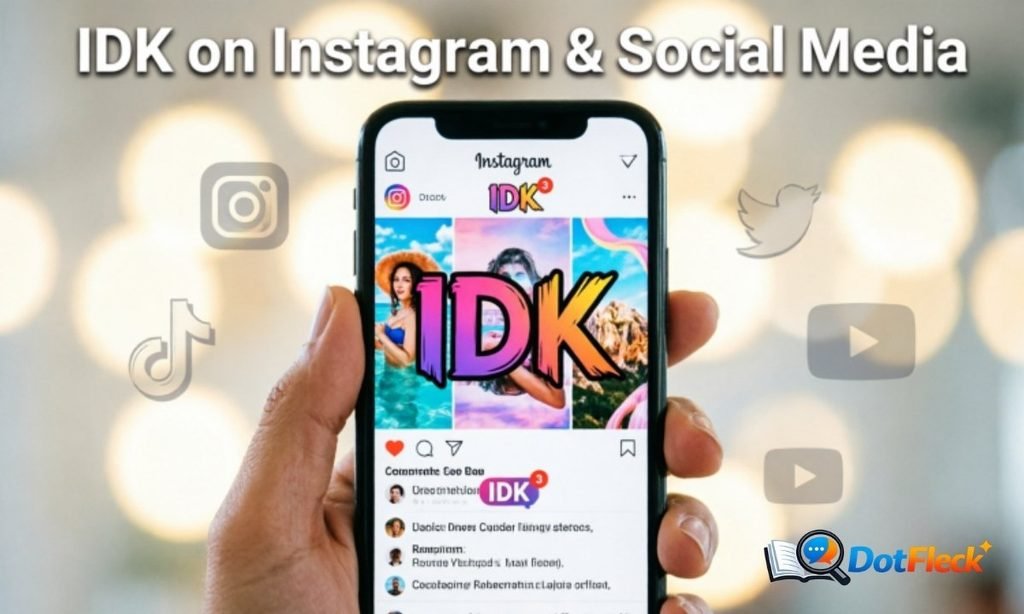
On Instagram, IDK shows up constantly in comments, captions, and story replies. It works the same way it does in texting, just with a slightly more public tone.
You’ll see it under posts where someone’s asking for opinions (“idk, kinda love it though”), in caption text expressing mild uncertainty about a photo or decision, or in DMs replying to a question the person hasn’t thought about yet.
One small nuance: on public comments, IDK often gets paired with an emoji or extra punctuation (“idk 😭” or “idk???”) because tone is harder to read without context clues that a private text conversation naturally has.
Where the Abbreviation Comes From
IDK follows the same shorthand pattern as older internet abbreviations like BRB, TTYL, and LOL. It’s not tied to one platform or app. It grew naturally out of early instant messaging and SMS, where character limits and typing speed pushed people toward shorter forms of common phrases.
There’s no single documented origin point, and honestly, most casual abbreviations like this don’t have one. It just became common enough through repeated use that it stuck.
Real Examples in Conversation
Context changes everything, so here are a few different situations side by side.
Group chat, planning: “where should we eat tonight” → “idk, you guys pick”
One-on-one, emotional: “you seem off today” → “idk, just a lot going on I guess”
Comment on a post: “Is this outfit too much?” → “idk it’s kind of iconic tbh”
Dating text, avoiding commitment: “so are we exclusive or what” → “idk, haven’t really thought about it”
Notice how the meaning shifts from indifference, to vulnerability, to playful opinion, to actual avoidance, depending on nothing but the situation around it.
When to Use It and When to Skip It
IDK works fine in casual, low-stakes texting. It’s quick, it’s normal, and nobody reads it as rude in most everyday exchanges.
It’s a weaker choice in a few situations:
- Replying to something serious or emotionally important, where a real answer (or “I need time to think”) lands better
- Professional messages, emails, or work chats, where it can come off as careless
- Conversations where the other person is clearly looking for a decision, not a shrug
If you actually don’t know, saying so isn’t the problem. The issue is when IDK gets used as a substitute for an answer someone’s capable of giving but doesn’t want to commit to.
Common Mistakes People Make With IDK
A few patterns show up again and again in how people misread or misuse this abbreviation.
- Assuming a flat “idk” always means disinterest, when sometimes it’s just genuine uncertainty with no hidden meaning
- Using IDK repeatedly in serious conversations, which can come across as avoidant even if that’s not the intent
- Missing that punctuation changes tone a lot. “idk.” reads very differently from “idk!” or “idk lol”
- Overanalyzing a single IDK text instead of looking at the pattern across a whole conversation
That last one trips people up more than anything else. One short reply rarely tells the full story. A string of them, especially paired with slow responses, usually says more.
Related Texting Abbreviations
IDK sits in a small family of similar shorthand terms, each with its own shade of meaning.
| Abbreviation | Meaning | Typical Tone |
| IDK | I don’t know | Neutral to uncertain |
| IDC | I don’t care | Dismissive or indifferent |
| IDGAF | I don’t give a f*** | Strongly indifferent |
| TBH | To be honest | Direct, sometimes blunt |
| IMO | In my opinion | Sharing a viewpoint |
| NVM | Never mind | Dropping the topic |
Frequently Asked Questions
Does IDK mean someone is upset?
Not by itself. IDK is a neutral text shorthand for “I don’t know.” It only signals upset feelings when combined with other clues, like delayed replies, short answers across multiple messages, or a shift in usual texting tone.
Is it rude to reply with just “idk”?
It depends on the question. For casual stuff like picking a restaurant, it’s completely normal. For serious or emotional questions, a bare “idk” with nothing else can feel dismissive, even if that’s not the intent.
What’s the difference between IDK and IDC?
IDK means “I don’t know,” showing genuine uncertainty. IDC means “I don’t care,” which is a stronger statement of indifference. Mixing them up changes the message significantly, so they’re not interchangeable.
Can IDK be flirty?
Yes, especially in dating or crush-related texting. A playful “idk… maybe” after a direct question often works as light teasing rather than actual uncertainty, particularly when there’s an emoji or trailing punctuation attached.
Is IDK used the same way on every platform?
Mostly yes, since it’s a general texting abbreviation rather than a platform-specific term. Instagram comments and DMs use it the same way texting apps do, though public comments often pair it with emojis to clarify tone.
Should I avoid using IDK in professional messages?
Generally, yes. In work emails or formal chats, it reads as too casual. Phrases like “I’m not sure, let me check” or “I don’t have that information yet” communicate the same thing without sounding careless.
Bottom Line
IDK is a small abbreviation that carries a surprising amount of nuance once you look past the literal definition. It can mean real uncertainty, quiet hesitation, playful deflection, or a soft way to dodge a direct question.
The words never change. The meaning almost always depends on who’s typing it, what came before it, and how the rest of the conversation is going. Reading that context is really the only reliable way to know what someone means when they send it.

Ethan Whitmore is an English language writer who enjoys making grammar, word meanings, and modern slang simple and easy to understand. His content focuses on clear explanations, practical examples, and everyday English usage.